In the investigative report “How a Little-Known Tennessee Law Convicts Black Children for Murders They Didn’t Commit,” the non-profit newsroom MLK50 examines the role Tennessee’s Felony Murder law played in seeing 104 Tennessee children sentenced to die in prison.
Tennessee’s felony murder is classified as first-degree murder under Tennessee Code § 39-13-202. It allows a person to be convicted of murder without proof of intent to kill, provided a death occurs during the commission or attempted commission of specific underlying felonies. Prosecutors do not need to prove the defendant intended to cause a death, but only that they participated in the underlying dangerous felony during which a death occurred. This statute often impacts juveniles and minority defendants who get roped into illegal activity planned and committed by others.
Excerpts from the report appear below.
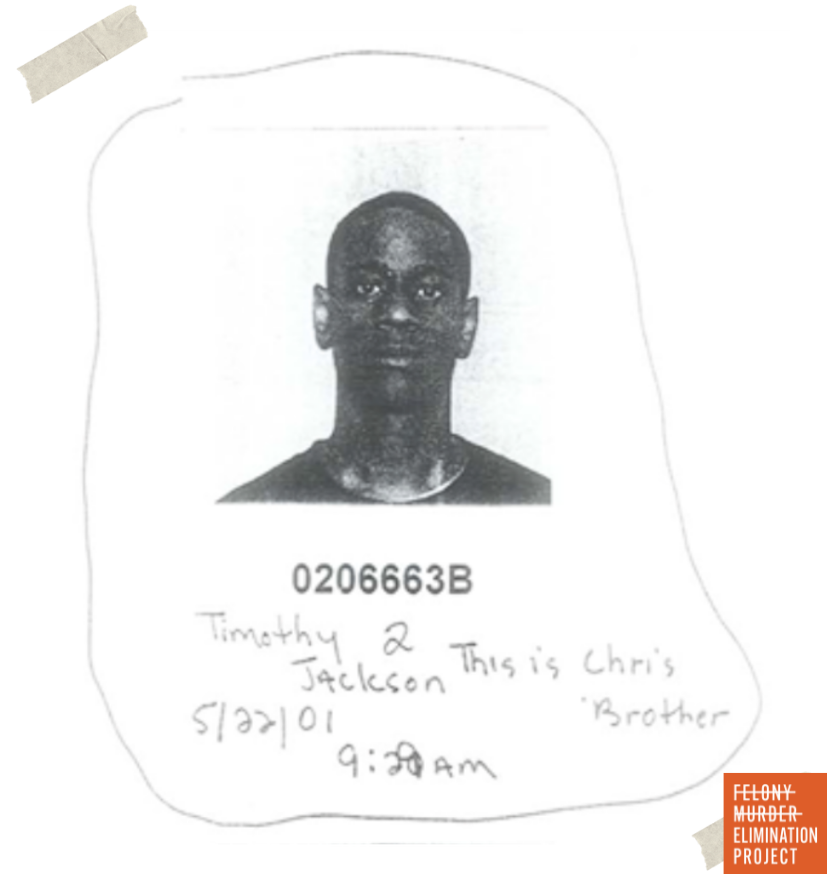
This is a story about 104 children sentenced to die in prison by the state of Tennessee. Each was convicted of a murder — even though some had not killed anyone.
In several cases, the children had been abused and threatened by an adult for months or years. Then, they were prosecuted after that adult killed someone in front of them.
In other cases, they were sent to prison for a murder committed by a friend. A group of young people set out to commit a crime — usually a robbery — and it all went wrong when one member of the group shot a cashier or a bystander.
Almost every single one of these children is Black.
They were all prosecuted under a little-known aspect of Tennessee law, known as “the felony murder rule.” The rule is deceptively simple: If you participate in a felony, and someone dies because of the crime, a prosecutor can charge you with their murder.
Prosecutors aren’t required to file these charges — it’s a matter of their individual judgment. District attorneys have argued that this discretion makes the rule valuable. When necessary, they can use it to punish people who actively participated in crimes, they say, while sparing those who don’t deserve life imprisonment.
No one monitors how prosecutors use the rule. The state does not track how many people — adults or children — have been convicted of felony murder, nor how many have been charged.
MLK50: Justice Through Journalism spent a year collecting data on felony murder. We analyzed court records from hundreds of cases and conducted dozens of interviews with those incarcerated under the rule and their families, former defense attorneys and former prosecutors.
Over 40% of these children were convicted in one place: Shelby County, Tennessee’s only majority Black county. Bill Gibbons, the county’s district attorney from 1996 to 2011, prosecuted most of these youth. Every child convicted of felony murder during his tenure was Black.
When asked, Gibbons attributed MLK50’s findings to “Black-on-Black crime.” But these racial disparities cannot be explained by the actions of Black children alone. MLK50 found that some youth, whose families could afford private attorneys, received generous plea agreements that prevented them from being convicted of felony murder.
Meanwhile, former district attorneys told MLK50 that their colleagues sometimes decided not to charge white youth with felony murder. As one former prosecutor said, “They’ll say, ‘We don’t want to ruin this white kid’s life.’”
You can read the full report, “How a Little-Known Tennessee Law Convicts Black Children for Murders They Didn’t Commit” on the MLK50 website. MLK50 is a nonprofit news outlet in Memphis focusing on the intersection of poverty, power and policy.