The following article “Governor could grant clemency in 565 death penalty cases. Or not” appeared in Capitol Weekly on August 23rd, and is written by Dan Morain.
Excerpts appear below.
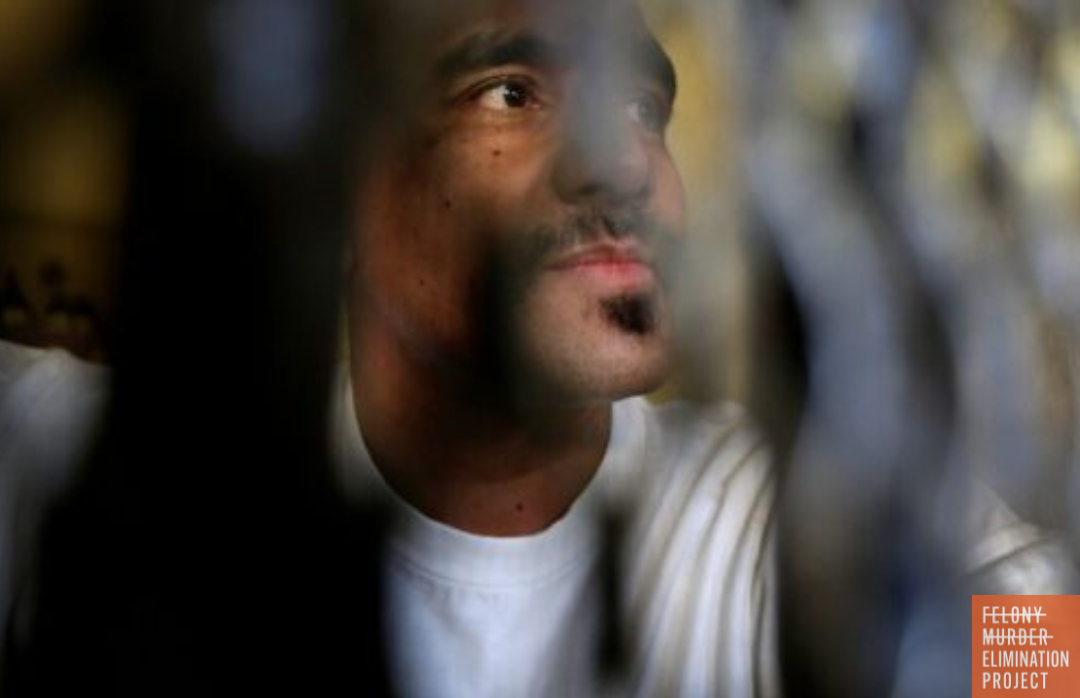
As his time as governor comes to an end, Gov. Gavin Newsom is facing a life-or-death decision: whether to commute the sentences of the 547 men and 18 women in state prison who have been condemned to death.
There is good reason to believe Newsom will take that step, and there is reason to believe he won’t. Neither he nor his aides are telegraphing his plan.
I was part of the gaggle of reporters in the Capitol hallway outside the state Senate chambers on March 13, 2019, when Newsom, two months into his first term, strode up and made the extraordinary announcement that he was granting reprieves to California’s condemned inmates, then numbering 737.
By Executive Order N-09-19, Newsom repealed California’s lethal injection protocol, which was being challenged in court, and decreed that the death chamber at San Quentin State Prison be dismantled, its parts shipped to some warehouse.
The death penalty may not be front of mind for California voters now. Another execution is theoretically possible though highly unlikely. But regardless of their view of capital punishment, past governors have struggled with the issue.
Pat Brown was so haunted by the issue that he wrote a book about it, “Public Justice, Private Mercy,” published in 1989.
“In my eight years as governor,” he and his co-author Dick Adler wrote in the prologue, “I was obliged to consider 59 death penalty cases. I was the last stop on the road to the gas chamber for these 59 people. After much deliberation, I sent 36 of them to death and granted clemency by commuting the sentences of 23 others to life in imprisonment without possibility of parole.”
“It was an awesome, ultimate power over the lives of others that no person or government should have or crave. And looking back over their names and files now, despite the horrible crimes and the catalogue of human weaknesses they comprise, I realize that each decision took something out of me that nothing–not family or work or hope for the future–has ever been able to replace.”
No matter what Newsom does on the clemency question, the death penalty will remain embedded in the state constitution, thanks to a 1972 ballot measure championed by Reagan and future Gov. George Deukmejian. Voters would have to decide by a ballot measure to strip it from the law.
A commutation would not authorize the inmates’ release. They still would face life behind bars. But Anne Marie Schubert, the former Sacramento County District Attorney who is president and chief executive officer of the nonprofit Criminal Justice Legal Foundation, pointed to the push in recent years to abolish the concept of life in prison without possibility of parole. If that effort succeeds, formerly condemned inmates could be freed.
For a hint of what he might do as he prepares to leave office, look at what he said eight years ago as he prepared to assume office. Under questioning by Laurel Rosenhall, then of CalMatters, Newsom said he had met with the then-occupant of the corner office.
“I told Gov. Brown the other day to solve this before the next governor comes into office. … I said what are you doing, what are you going to do,” Newsom said.
Newsom would not reveal Brown’s reply. But the answer became apparent once Brown departed Sacramento for his home in the hills of Colusa County. The death sentences of 700-plus inmates were intact, waiting for Newsom.
You can read the full article, “Governor could grant clemency in 565 death penalty cases. Or not” on the Capitol Weekly website. Capitol Weekly is a publication of Open California, a 501(c)3 nonprofit organization founded in 2012 to inform, enlighten and educate Californians about public policy and state governance, and to provide a platform for engagement with public officials, advocates and political interests.
Dan Morain has been a journalist in California for more than 40 years, focusing on state policy, politics and justice-related issues for publications including the Los Angeles Times, Sacramento Bee and CalMatters. He is the author of “Kamala’s Way, An American Life,” published by Simon & Schuster in 2021.