Incarcerated readers in Minnesota prisons are helping choose this year’s Inside Literary Prize, a national book award determined by a jury of entirely incarcerated readers. Inside Literary Prize was first awarded in 2024 and was co-created by Freedom Reads, which aims to get more books in prisons.
Three hundred incarcerated people at 12 prisons around the country, including correctional facilities in Rush City and Shakopee, Minnesota, will decide the 2026 winner.
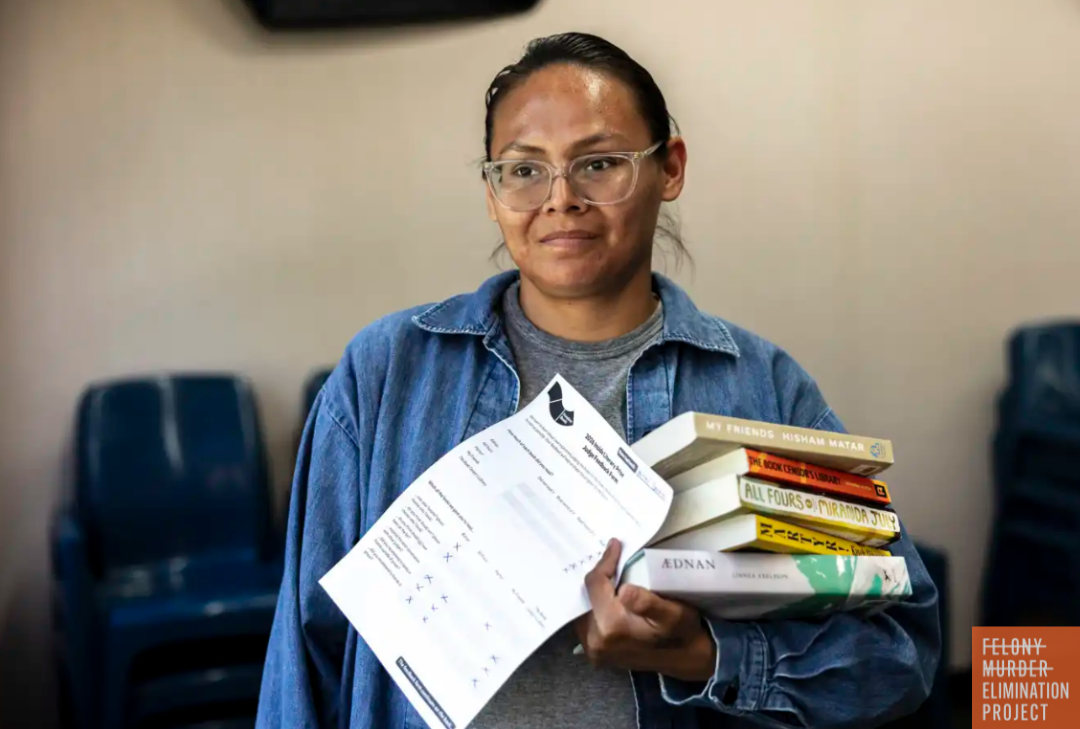
“There were times where I walked in the room and I’m like, ‘I’m not with this book, I don’t get it,’” said Makayla Richardson. “But then, to sit in a room with other people and get their perspectives … it’s just very helpful and educational.” Richardson is part of a group of 26 women and transgender people serving time at Minnesota Correctional Facility-Shakopee, the state’s only women’s prison, who met over the past few months to discuss five critically acclaimed novels: “Ӕdnan,” “The Book Censor’s Library,” “All Fours,” “Martyr!” and “My Friends.”
The award is a collaboration between Freedom Reads, the Center for Justice Innovation and the National Book Foundation. The idea is to include incarcerated readers in national literary discussions and foster connections and personal growth behind prison walls.
The literary prize program is one way Freedom Reads fosters relationships with prisons to accomplish the organization’s main goal: putting micro libraries in every housing unit in every prison in the country. Literacy and literature programs can help incarcerated people rehabilitate and reduce recidivism rates. However, traditional prison libraries can have limited selections and hours.
Coty Martinez decided her top pick was “Ӕdnan,” a novel about two Indigenous Sámi families navigating Scandinavian colonialism over a century. “This book is so intimidating, because it seemed like it was the bigger out of all five. But when I opened it up, I just could not put it down,” Martinez said. “I think that, a lot of times, people tend to not want to remember all the things that happen to Indigenous people. But (I) also think it’s important to remember, because this is where we come from,” Martinez, who is Indigenous and a member of the Houma Nation Tribe in Louisiana, said. “We can acknowledge that and walk through that pain.”
Winter Smith is from Red Lake Nation in northern Minnesota and also chose “Ӕdnan” as her top pick. “I feel like everyone should be educated in generational trauma,” Smith said.
Smith also liked the book “All Fours,” and it inspired her to have deeper conversations with her daughter. “All Fours” features a woman in her 40s and explores themes of middle-aged sexuality and identity. When Smith told her 13-year-old daughter about the plot, she learned her daughter didn’t know what menopause was. “I’m starting to realize that I have to start telling my daughter more about what happens to women growing up throughout life,” Smith said.
Smith added she plans to send all five books to her daughter to read so they can discuss them together.
You can read more about the Inside Literary Prize at the Freedom Reads website. Freedom Reads is the only organization in the nation using literature, design, and architecture to create transformative experiences for people in prison and to meaningfully elevate the dignity of the millions of people in this country touched by the criminal legal system.