In “California Prisons Use Starvation As a Weapon Against Violence and Overdoses” award winning incarcerated journalist Steve Brooks puts a spotlight on the dehumanizing and barbaric practices in use at the Pelican Bay State Prison restricted housing units.
Two separate massive, coordinated protests (in 2011 and 2013) led by incarcerated persons in the SHU at Pelican Bay State Prison grew into 29,000 incarcerated persons across California. The strikers, including a multiracial group known as the Short Corridor Collective, protested indefinite, long-term solitary confinement and human rights abuses. The 3-week initial strike prompted prison officials to agree to review segregation policies. However, incarcerated persons alleged the California Department of Corrections and Rehabilitation (CDCR) failed to institute meaningful changes, sparking further collective action.
The scale of the 2013 protest drew global attention and spotlighted the psychological toll of prolonged solitary confinement, with human rights organizations and the United Nations condemning California’s policies. The hunger strike lasted for 60 days before ending on September 5, 2013, as lawmakers promised to hold hearings regarding prison reforms. The sustained resistance successfully shifted policies around solitary confinement in California. It resulted in the 2015 Ashker v. Governor of California settlement, which effectively ended indefinite solitary confinement in the state and shifted the criteria for SHU placement from arbitrary gang status to actual documented misconduct.
Ten years later, CDCR is attempting to rebrand it’s use of SHU by referring to the same barbaric, inhumane use of indefinite solitary confinement by using a different name; Restricted Housing Units (RHU). Recent policy memos from CDCR indicate curtailed privileges for persons held in RHU, including strict limitations on commissary and canteen food purchases. These restrictions, which essentially cut off access to extra food, are tantamount to using starvation and deprivation as systemic control weapons.
Excerpts from Brooks’ piece appear below.
When Todd Ashker was escorted to the prison visitor area in waist chains and leg irons to see his attorney, he was trembling and could barely walk on his own. His arms and legs looked like stick figures. His biceps were shriveled. It had been almost 60 days since his last meal.
His attorney feared Ashker was near death. “You won. You can eat now. Eat something!,” he said. But Ashker wasn’t sure if he could trust this news. It was September of 2013 and Ashker was serving an indeterminate sentence in Pelican Bay State Prison maximum security housing unit (SHU program). A concrete and steel fortress of silence that is shaped like a giant X, the prison was built for the most violent and disruptive gang leaders and others deemed a security threat.
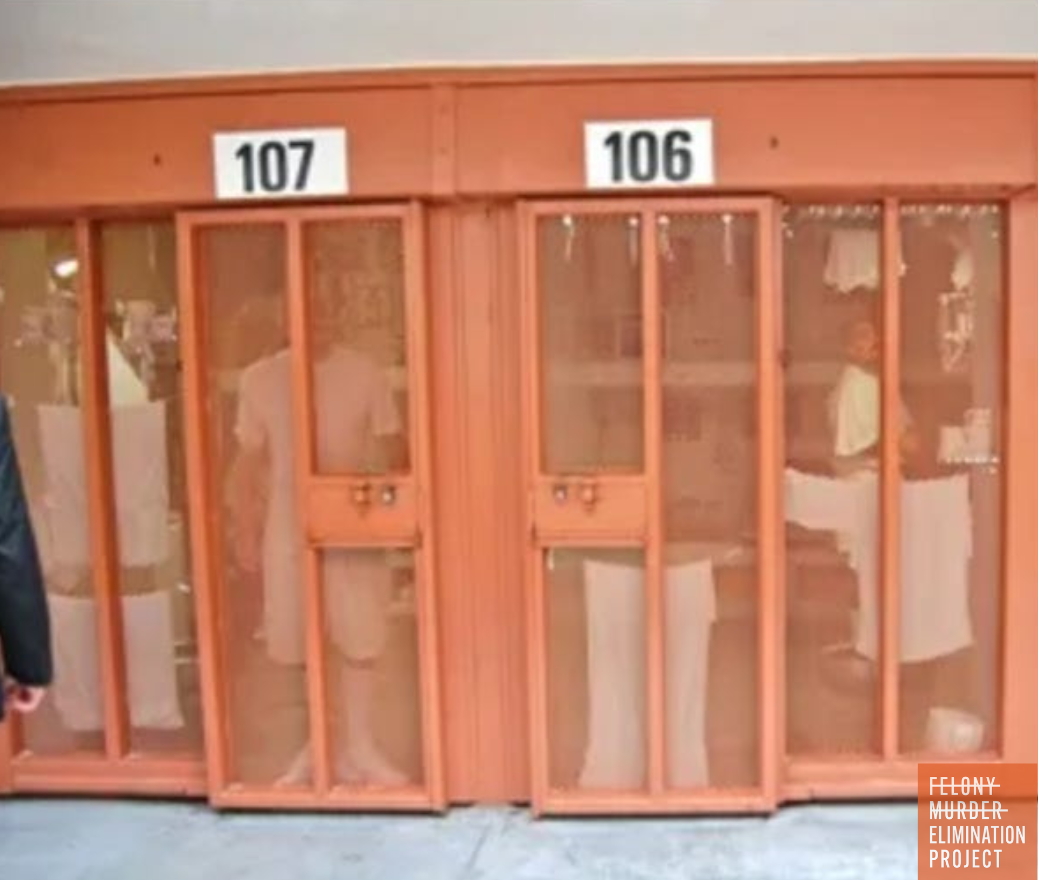
In 1989 Pelican Bay became California’s first supermax facility, modeled after the federal facility built in Marion, Illinois in 1963. The Pelican Bay SHU was designed to place men on permanent lockdown, with no view of the outside world, in conditions that are arguably worse than death. Built for punishment, people were confined to a small cell for 23-hours a day with no opportunities for educational or vocational enrichment and poor quality food and nutrition.
On July 8, 2013, 30,000 incarcerated people joined in solidarity with Ashker and others at Pelican Bay in what would become the largest hunger strike in U.S. history. For almost two months, they followed in the footsteps of the hunger-striking Irish Republican Army activist and prisoner Bobby Sands, using starvation as a weapon of war to protest their inhumane conditions. Their plan was to make Pelican Bay a living hell, upending the vision of the white politicians in suits who had broken ground on the facility more than 30 years earlier.
When social justice groups learned about the strike, they helped the men find a lawyer to pursue a lawsuit, which resulted in a settlement agreement in September 2015.
Now, a decade later, CDCR is instituting barbaric and dehumanizing food deprivation practices once again. On May 4, 2026, CDCR ended canteen food purchases for incarcerated people sentenced to solitary confinement in Restricted Housing Units (RHU).
According to the United Nations Minimum Standards for the Treatment of Prisoners (aka “ The Nelson Mandela Act), “Every prisoner should be provided food of nutritional value, adequate for health and strength, of wholesome quality, well prepared and served.” California regulations prescribe similar rules. Yet, California prisoners are routinely fed trace amounts of cold mystery meats, runny oatmeal, a tablespoon of eggs or beans, warm milk, wilted lettuce and stale bread.
How much more true will this become if CDCR is allowed to use hunger pains and body wasting as a tool of torture for those placed in solitary confinement or RHUs? Over the last eight years, at least 200 incarcerated people have committed su1c1de while in CDCR custody. The bodies are often found in solitary confinement units. Twenty-three hours a day of confinement to isolation and silence in a concrete box with steel doors and fluorescent lighting that never fully dims can break the strongest people. Mountains of evidence suggest that sensory deprivation leads to psychological deterioration, hallucinations, paranoia and self mutilation. Some prisoners have reached the point of smearing feces on the walls and screaming at the top of their lungs until their lifeless bodies are found hanging.
Want to take action or learn more?
The public comment period for the new regulations restricting supplemental food purchases for those in restricted housing units is May 22 through July 8, 2026. A public hearing will be held on July 8 from 10-11:00 am in the State of California Building C, Room 101, 8260 Longleaf Drive in Elk Grove. Written comments can be emailed to RPMB@cdcr.ca.gov. All public comments must be received or postmarked by July 8, 2026.
To learn more about the Pelican Bay hunger strike, watch the Emmy Award-winning documentary The Strike and dig into more storytelling about it at Reveal.
Read the full piece “California Prisons Use Starvation As a Weapon Against Violence and Overdoses” by Steve Brooks on his substack “In Proximity.“
Steve Brooks is an award-winning journalist, outspoken advocate and corrections expert with more than 30 years of lived experience in the California prison system. Brooks co-founded The People in Blue and am helping transform toxic prison culture from the inside.