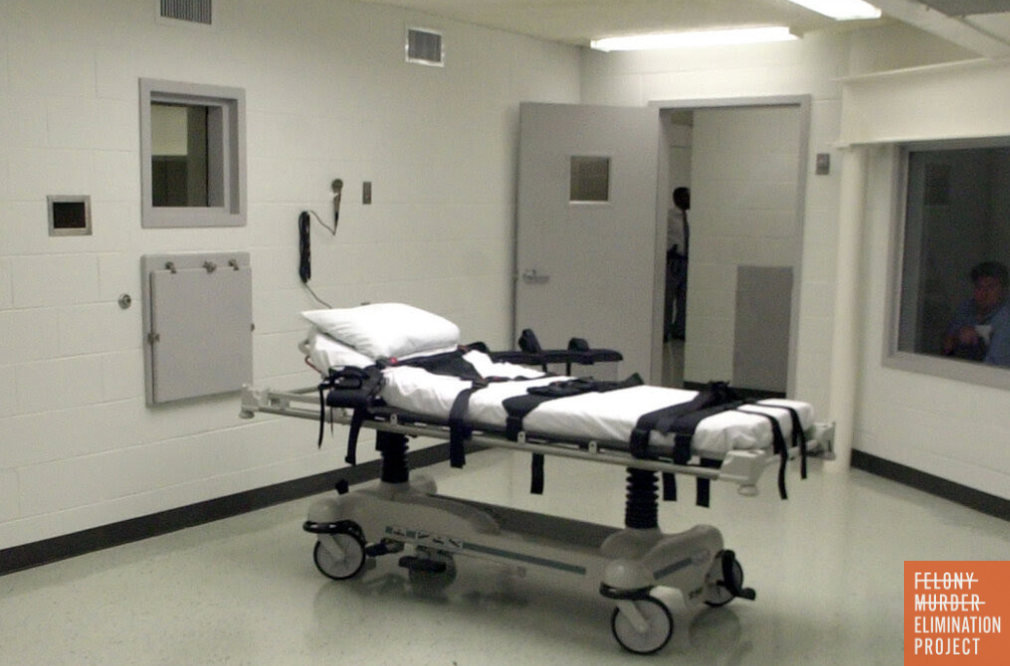
Last week, the United States Supreme Court declined to set aside a lower-court ruling that prohibits the state of Alabama from using nitrogen gas execution to carry out the death sentence of Jeffery Lee.
TW: description of execution methods
Last year, Lee filed a federal lawsuit challenging nitrogen suffocation as cruel and unusual punishment because it “causes inmates to experience prolonged air hunger and feelings of suffocation, which evoke severe anxiety, fear, and physiological distress.” The suit claimed the method cruelly superadds pain in violation of the Eighth Amendment because it triggers the person’s survival instincts to breathe oxygen while also preventing them from doing so.
The Eleventh Circuit Court of Appeals decision found the nitrogen gas method is unconstitutionally cruel, as medical experts testified nitrogen gas executions would cause condemned persons to suffer intense distress akin to being suffocated or drowning. SCOUTS issued a brief order that came well after the hour originally planned to initiate Jeffery Lee’s execution declining to set aside the lower court’s ruling. Lee’s attorney likened the method to waterboarding, the interrogation technique used by the C.I.A. after the September 11th 2001 attacks in which detainees were made to feel they were drowning. The practice has been widely condemned as torture.
Alabama’s use of the experimental method has raised serious concerns that it causes significant and lengthy suffering. Forcing a person to breathe nitrogen gas through a facemask until they die from lack of oxygen, Justice Sonia Sotomayor recognized, inflicts the “unnecessary psychological terror” of “conscious, excruciating suffocation” and “severe emotional suffering” while “consciously experiencing the ‘primal urge to breath.’”
The majority did not explain its thinking. Nor did the three dissenters, Justices Clarence Thomas, Samuel Alito and Neil Gorsuch. Though the justices’ reasoning was opaque, they left in place a ruling that was clear and based on evidence tested by the adversarial system after a full trial.
Depriving an inmate of oxygen causes severe and needless pain, lower courts ruled. They said the state remained free to execute Lee using the alternative method he had proposed; a firing squad.
Bernard Harcourt, a law professor at Columbia University who represents another condemned person challenging Alabama’s nitrogen-gas protocol, said the Supreme Court has long forbidden punishments involving torture or a lingering death.
“Burning someone to death, drowning them or suffocating them are forms of lingering death that the founders, and Blackstone before them, considered off limits,” he said, referring to William Blackstone, whose legal commentaries influenced the founding generation.