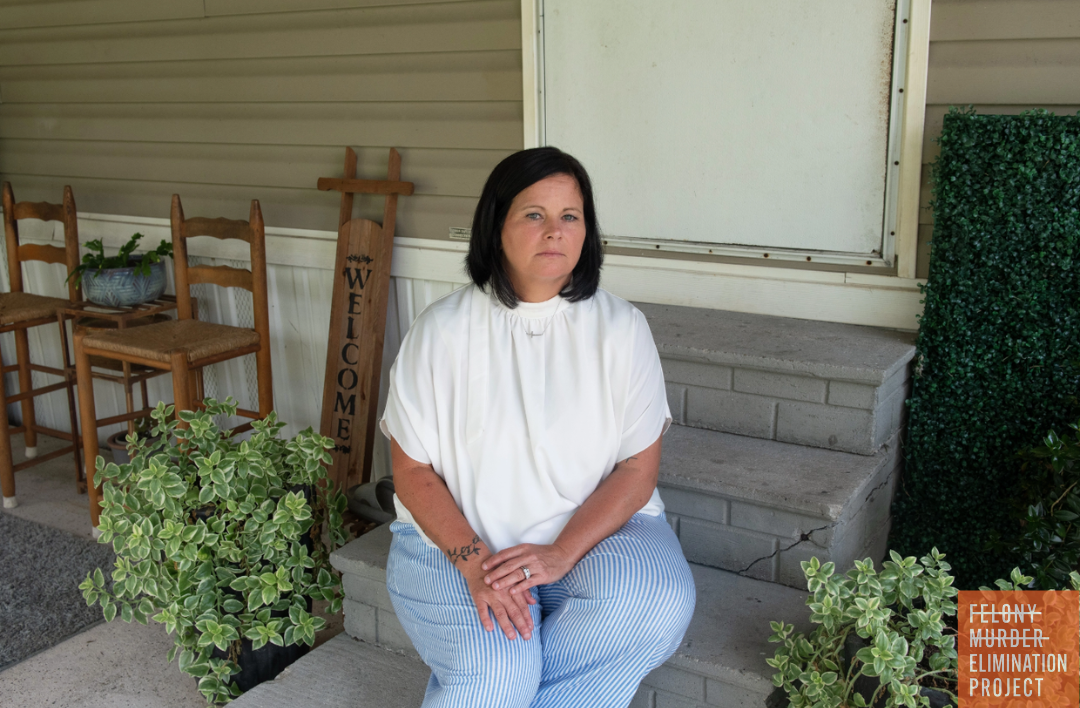
The Huffington Post recently featured the case against Rhonda Jewell, a 46-year-old mother of three and a highly-regarded caregiver in her small rural Florida community. Jewell had a devastating memory lapse in July 2023, forgetting a beloved child in a parked vehicle, a heart-wrenching mistake that thousands of loving parents and caregivers have made.
This unimaginably tragic accident was just that: an accident. It was not a crime, much less murder. Yet Jewell was tried, convicted, and sentenced under Florida’s felony murder law and is serving a seventeen-year prison sentence.
TW: Infant death
On a sweltering summer day in 2023, Jewell was driving to a home to care for multiple children. In her rush to arrive on time, Ms. Jewell lost awareness that the ten-month-old granddaughter of her best friend, whom she was also scheduled to watch that day, was quietly sleeping in a rear-facing car seat behind her. She went inside and began engaging with the other kids as she always did, having forgotten that the baby was still in the car. It was not until the child’s mother arrived five hours later that Ms. Jewell realized her devastating mistake. Ms. Jewell sprinted to the car in a panic and pulled the baby’s lifeless body out, holding the baby close and praying that God would take herself instead of the child.
The event that played out that day has become alarmingly familiar since the early 1990s, when the advent of airbags meant moving children to the backseat, out of view. Indeed, while vehicular heatstroke deaths were relatively uncommon before 1990, over 1,100 children have perished in hot cars nationwide since then, averaging 38 per year. In the vast majority of incidents, the child was left unintentionally and unknowingly by a loving and devoted parent or caregiver, who simply forgot, due to multitasking, stress, a change in routine, or a combination of factors, that the child was in the car.
These sorts of “prospective memory failures” are a well-documented neuroscientific phenomenon that we all experience on a daily basis—we forget to do something we planned to do because we were on autopilot and got distracted. In essence, our habit-brain memory system takes over and overwhelms its prospective memory function.
In Jewell’s case, the evidence showed overwhelmingly that her mistake in leaving the child, whom she loved as one of her own, was entirely accidental; the product of a tragic memory lapse, not a knowing or conscious act. A Florida jury acquitted her of all crimes involving “culpable negligence” precisely because the State presented no evidence that her fatal error was conscious.
How, then, is she facing seventeen years’ incarceration? Because the State of Florida also charged her with murder under the felony murder doctrine, a legal principle that deems unintentional deaths that occur during the commission of a felony to be murder. While the felony murder rule originated as a way to punish and deter foreseeable deaths caused by people who intentionally undertake inherently dangerous felonies, some states have distorted it to cruel extremes, capitalizing on its diluted burden of proof to transform accidental or innocent conduct into murder.
Jewell’s case exemplifies these extremes. Her tragic memory lapse was plainly not murder under any reasonable definition of the word. The only way the State of Florida could deem it so was by charging her with felony murder based on an underlying felony “leaving a child unattended in a motor vehicle” that the trial court ruled did not require any proof of knowledge.
“The presumption in our legal system is that every crime has a mental element,” said Christine Monta of the MacArthur Justice Center, one of the attorneys representing Rhonda on appeal. “This was a tragic accident where there was not just no intent, but no knowledge that the accident was occurring, being elevated to murder.”
As we hear far too often, Jewell was convicted of murder, and sentenced to seventeen years in prison, for something she did not even know she had done, much less intend to happen.
Read more in “A Baby Died In A Tragic Accident. Why Was It Treated As Murder?” from the Huffington Post.