The following essay “We Count Too: Why Women’s Health Month Must Include Incarcerated Women” is written by incarcerated writer Kwaneta Harris, and appears on her Substack, Write or Die.
Excerpts appear below.
Every May, the nation pauses to celebrate women’s health. Pink ribbons flutter. Awareness campaigns bloom. Social media fills with reminders to schedule mammograms, attend prenatal checkups, and honor our bodies as worthy of care. But behind the walls of America’s jails and prisons, roughly 231,000 women watch that celebration from a distance, as though it was never meant for them.
It wasn’t.
The United States spends more than $80 billion annually on incarceration. That number is staggering, and yet the policies and medical care that money sustains are overwhelmingly designed with men in mind. Women are an afterthought in a system built for bodies that do not menstruate, do not carry children, do not experience the particular hormonal architecture of female lives. We are a footnote in a policy framework that was never written with us in its margins.
I know this because I live it.
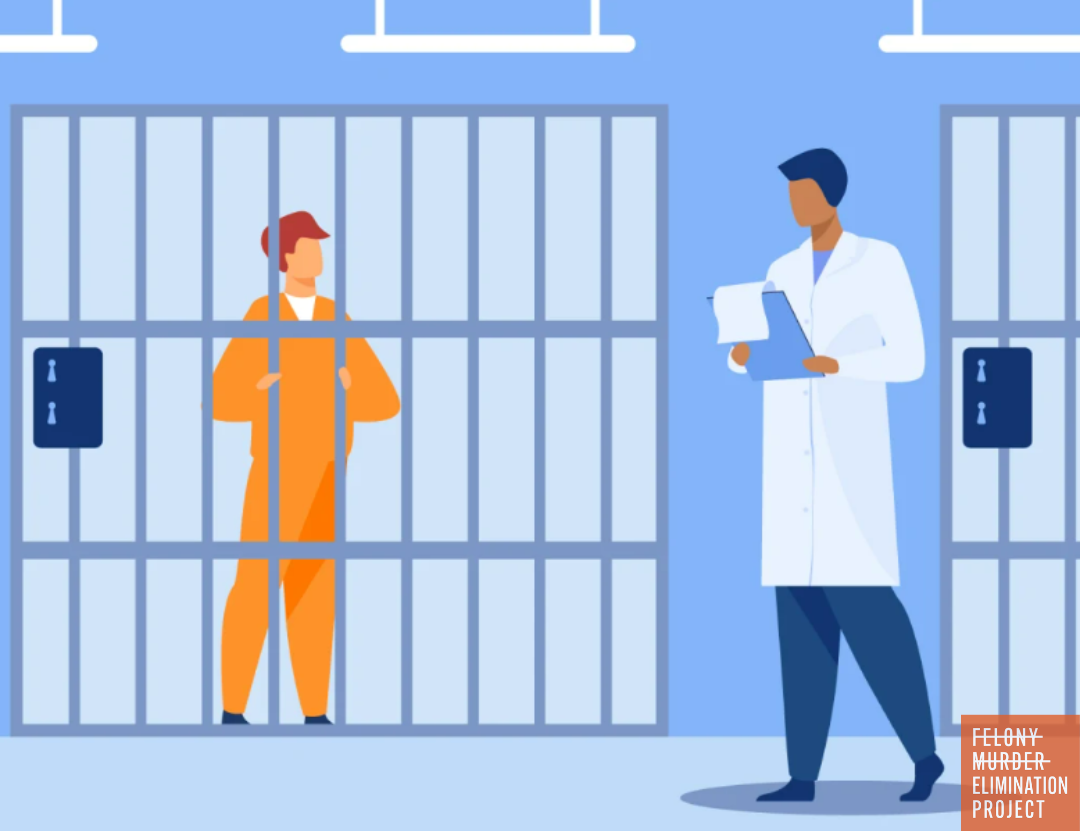
I have watched women in my housing unit beg for a second sanitary pad, ration the one they have, or improvise with toilet paper because supplies ran short. I have seen pregnant women laboring in shackles, their bodies restrained by policy in the very moment they needed to move freely through pain. I have listened to women describe symptoms of ovarian cysts, cervical irregularities, and breast lumps, only to be handed ibuprofen and told to submit another sick-call request. The gap between what exists and what is needed is not a crack. It is a canyon.
Women’s Health Month is not merely a season for celebration. It is a call to accountability. If we truly mean that women’s health matters, that women’s bodies deserve care and dignity, then that commitment cannot stop at the prison gate. The same breast cancer that threatens a woman on the outside threatens a woman on the inside. The same postpartum depression that needs treatment in a birthing center needs treatment in a cell block. Biology does not observe our distinctions between the free and the confined.
More than anything, I ask this: the next time you share a post about Women’s Health Month, let the circle be wide enough to reach us. We are still women. Our bodies still deserve care. And our lives, however circumscribed by circumstance, still matter.
We count too.
You can read the full essay “We Count Too: Why Women’s Health Month Must Include Incarcerated Women” by Kwaneta Harris on her Substack, Write or Die.
Kwaneta Harris is a former nurse, business owner, and expat, now an incarcerated journalist and Movements Against Mass Incarceration Social Change Fellow. In her writing, she illuminates how the experience of being incarcerated in the largest state prison in Texas is vastly different for women in ways that directly map onto a culture rooted in misogyny. Her stories expose how the intersection of gender, race, and place contribute to state-sanctioned, gender-based violence.