Yesterday, Bolts Magazine published “One Step Forward, Two Steps Back for Solitary Reforms in California.” This piece discussed the California Department of Corrections and Rehabilitation (CDCR) proposed new rules for Restricted Housing Units, also known as solitary confinement. These proposed regulations threaten to reverse critical reforms and expand the use of long-term restrictive housing in California prisons.
The proposed rules would allow people to be placed in restrictive housing for an indeterminate period without a disciplinary finding, conviction for serious misconduct, or a transparent evidentiary standard. This would create a pathway for more people to be subjected to prolonged isolation without meaningful due process, oversight, or relief.
No one should be forcibly isolated inside a cage for 23 hours a day.
The United Nations Mandela Rules strictly define solitary confinement as being confined for 22 hours or more a day without meaningful human contact. They declare that any period of isolation lasting longer than 15 consecutive days constitutes psychological torture The denial of social interaction and sensory stimulation inflicts severe psychiatric and neurological damage. The American Civil Liberties Union and medical organizations like the National Alliance on Mental Illness note that inmates often experience extreme anxiety, paranoia, psychosis, self-harm, and suicidal ideation.
Excerpts from the Bolts Magazine article appear below.
In California, survivors of solitary confinement who have spent years trying to seriously limit the practice are facing yet another setback as state prison officials unwind the minor reforms made in recent years.
Those reforms, which had reduced the number of rule violations that could make someone eligible for isolation and increased out-of-cell time for people in solitary, were part of a compromise Governor Gavin Newsom proposed after his 2022 veto of the Mandela Act, which state lawmakers had passed to bring solitary practices within international humanitarian guidelines. In his veto message, Newsom acknowledged the issue was “ripe for reform” and directed the California Department of Corrections and Rehabilitation (CDCR) to change its policies around isolation.
The changes, which went into effect in November 2023, already fell short of what advocates hoped to accomplish—for one, they only applied to the state’s prisons, carving out jails and detention centers, which had been included in the oversight bill that Newsom vetoed. And now, citing an increase in violence and overdoses within the prison system, CDCR says it must “dial back reforms”
Prison officials implemented this “dial back” as emergency regulations in May, and are now seeking to make them permanent. Their new rules expand the circumstances that render a person eligible for punitive isolation in a key way: California prisoners can now be put in solitary confinement and cut off from any form of communication with family members for up to six months following an accusation of simple battery of another incarcerated person without serious injury, though advocates argue that this sort of behavior is often triggered by psychiatric episodes rather than being an act of intentional violence. For many more serious violations, solitary terms have doubled. Access to food and communication has also been further restricted for people accused of rule violations.
The reversals have validated advocates’ earlier fears about Newsom’s decision to let the prison system handle its own reforms, rather than imposing legislative guardrails. They come at a time of reduced judicial oversight, too: A landmark 2015 settlement restricting solitary confinement in California, which came after some 30,000 prisoners went on extended hunger strike, ended in January 2024.
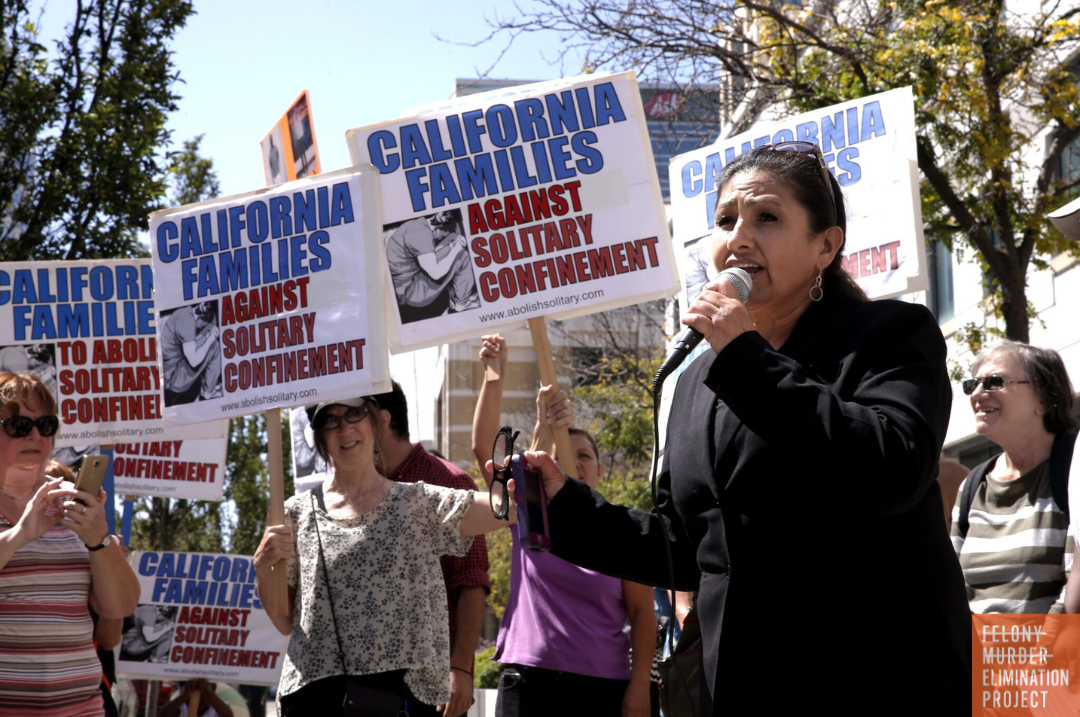
“To strip you now of all of these things takes you right back to that sensory deprivation, takes you right back to that isolated housing before the hunger strike,” Dolores Canales, a survivor of solitary confinement and leader of the group California Families Against Solitary Confinement, told Bolts.
Advocates told Bolts that the regulations CDCR announced in May have sparked widespread concern and anxiety amongst California’s incarcerated population and their loved ones. The reduced access to supplemental food from the commissary has left people hungry—“The regular food is just simply not enough to live on in CDCR,” Canales said. And cutting off phone, tablet, electronic messaging services—and even access to pens and paper—can now be done before a formal finding that prisoners have committed a violation, only further isolating prisoners from their relatives.
While punitive isolation can be psychologically destructive even for the most mentally resilient individuals, for those with mental illness it is often deadly. CDCR data shows that suicide rates within restrictive housing are significantly higher than for the rest of the prison population. “Segregation is so dangerous that even with all these [protective] measures, people still commit suicide at tremendously high rates,” Michael Bien, who represents prisoners with mental health issues under a class-action case that governs provision of mental healthcare within CDCR, told Bolts.
CDCR allowed the public to submit comment and speak at a hearing last Wednesday as it seeks to make the emergency regulations permanent. For just over an hour, person after person spoke against the changes, including one man who had done 33 years in solitary confinement. Trancita Ponce, the San Francisco ambassador for the Sister Warriors Freedom Coalition, told Bolts that the CDCR representatives present appeared affected by the testimony; at moments, some of them appeared to open their mouths in shock at what they were hearing.
Still, advocates can’t be sure that this feedback will affect the final outcome. “From everything that I’ve seen in the past, they give no heed, no consideration to the voices that are speaking up,” Canales told Bolts. The deadline for a decision regarding permanent regulation changes is next May.
You can read the full article “One Step Forward, Two Steps Back for Solitary Reforms in California” at the Bolts Magazine website. Bolts Magazine reports on the local elections and obscure institutions that greatly shape public policies but are overlooked in the U.S., and the grassroots movements that surround them.