In recognizing Indigenous People’s Day, we take a moment to note that Native Americans/Alaska Natives face severe, systemic overrepresentation across the U.S. criminal legal system, a disparity that has nothing to do with criminality and everything to do with the racist policies and practices embedded throughout the United States.
Data points to centuries of federal oppression, forced displacement, historical trauma, and the legacy of government-funded Indian boarding schools leading to the discrepancy that finds Native American/Alaska Natives encountering the legal system. Socioeconomic challenges like poverty, substance use, and mental health struggles are frequently met with criminal prosecution rather than community-based health or economic solutions.
Additionally, overlapping tribal, state, and federal authorities on reservations often lead to multi-jurisdictional charges and technical violations that non-Native populations don’t deal with. Official government datasets frequently underreport or obscure Native incarcerated populations by grouping individuals into broad “Other” categories, so it’s difficult to identify and address reform needs.
Key Incarceration Statistics pertaining to Native populations:
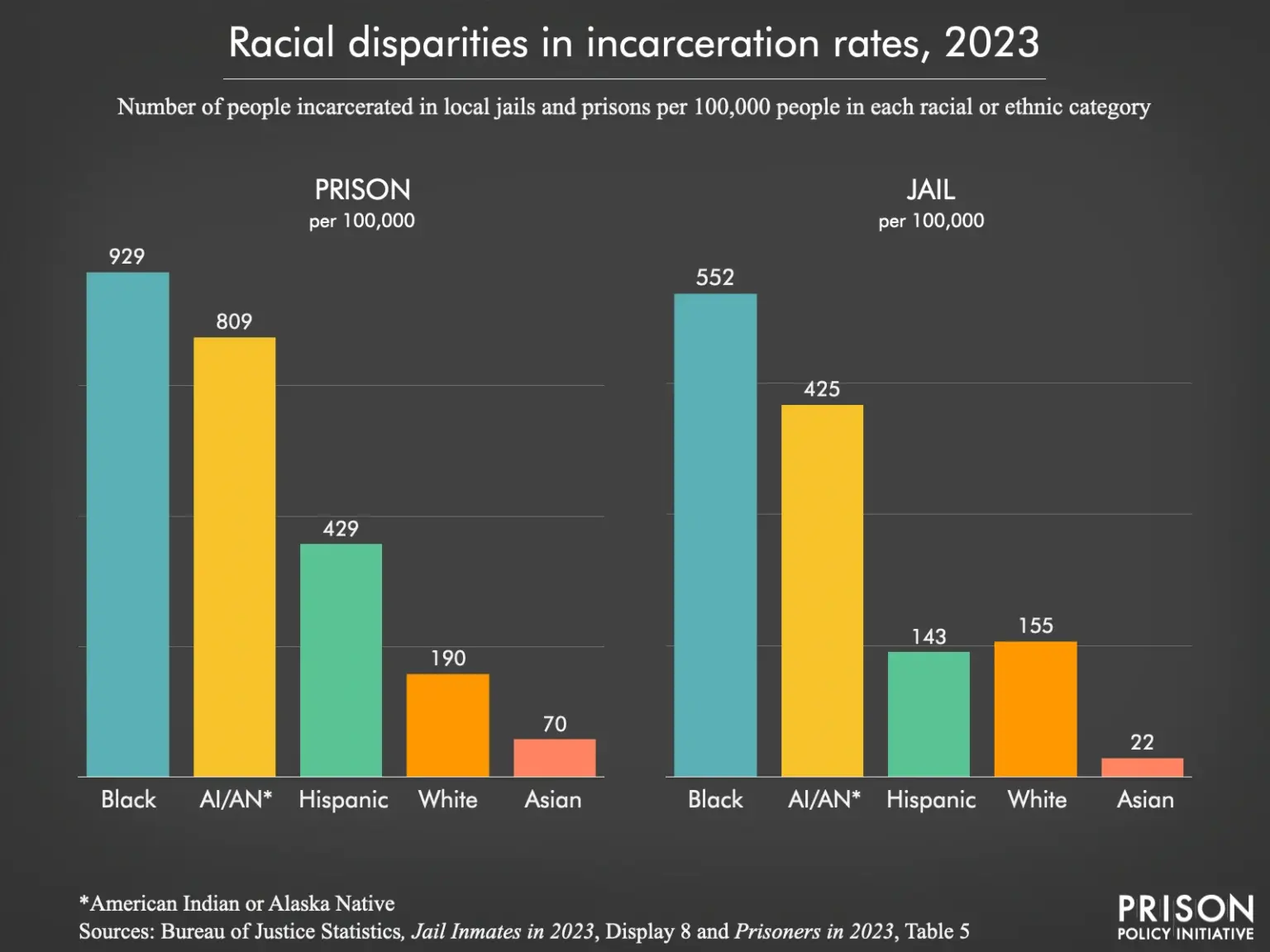
- State and Federal Prisons: Native people are incarcerated at a rate of 809 per 100,000 people—more than double the national average (360 per 100,000) and over four times the rate of white people (194 per 100,000).
- Local Jails: Native people are detained in local jails at a rate of 374 per 100,000, compared to a national rate of 194 per 100,000 and a white jail rate of 149 per 100,000.
- State-Level Disparities: In states with higher Indigenous populations (such as North Dakota), Native incarceration rates soar up to seven times higher than white incarceration rates, and Native Americans are overrepresented in prison populations across at least 19 states.
- Impact on Women: Native women account for 2.5% of all incarcerated women while representing only 0.7% of the U.S. population.
- Tribal Jails: Incarceration in Indian Country jails has grown significantly—increasing roughly 61% to 85% since 2000 despite overall population fluctuations.
Policy recommendations from justice reform advocates, legal scholars must focus on transferring authority back to tribal communities, correcting federal sentencing inequities, and addressing the root causes of systemic disparities.
Traditional public defense focuses strictly on the courtroom. By contrast, a holistic defense model pairs legal counsel with social workers, advocates, and tribal elders to address underlying needs. The Confederated Salish and Kootenai Tribes (CSKT) Tribal Defenders Office in Montana implemented this approach. They provide clients with housing assistance, mental health services, and cultural mentoring. In its first year, the CSKT program saw recidivism rates among chronic offenders drop by more than 50%.
A significant portion of tribal jail populations are detained for non-violent charges stemming from public intoxication (16%), drug possession (15%), or DUIs. Policy experts advocate for shifting away from criminalization and toward public health solutions: funding tribal treatment infrastructure resources and implementing ability-to-pay reforms, evaluating a defendant’s economic reality before issuing fines.
Finally, due to the complex web of federal, state, and tribal laws, Native people often face harsher prosecutions in federal courts than they would for the exact same offense committed outside a reservation. The U.S. Sentencing Commission’s Tribal Issues Advisory Group (TIAG) has urged federal changes to limit how tribal court convictions are used to automatically lengthen federal prison sentences. They also advocate for strict tribal notification requirements when Native youth face adult federal prosecution.
You can read more in “Over-Incarceration of Native Americans: Roots, Inequities, and Solutions” from the MacArthur Foundation’s website. The MacArthur Foundation works tp strive toward transformative change on some of the world’s most pressing social issues, including the existential threats of climate change, criminal justice reform, revitalizing local news in the U.S., expanding who creates, uses, and benefits from artificial intelligence, strengthening the well-being of Native communities, and empowering young people in Nigeria.