A March 2026 report from The Sentencing Project finds that restorative justice diversion programs deliver better outcomes for both victims and youth than the traditional juvenile court systems; reducing reoffending, increasing victim satisfaction, and promoting meaningful accountability. Yet despite strong evidence, access to these programs remains limited nationwide.
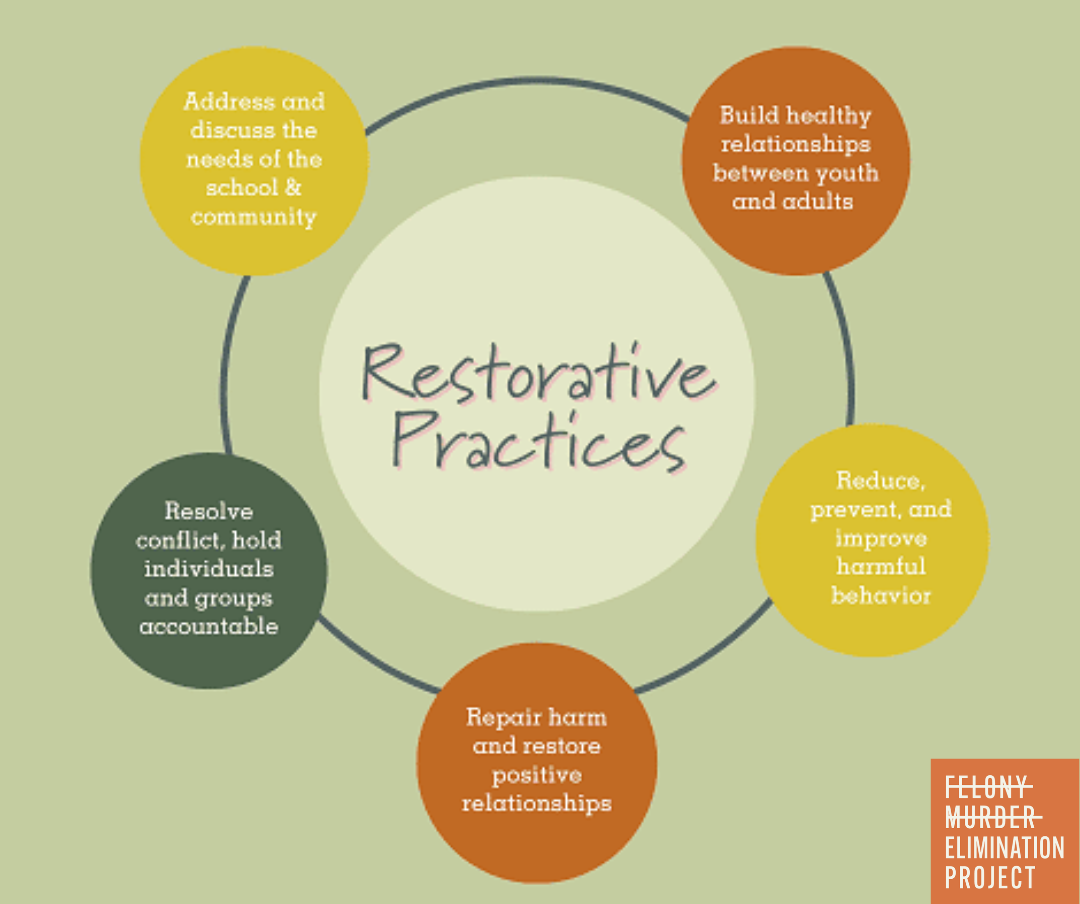
Restorative Justice Diversionary (RJD) programs are community-based approaches aimed at healing harm and preventing criminal charges. It involves diverting cases to community-based organizations for restorative justice processes instead of pursuing criminal charges.
Traditionally, the criminal legal system operates by focusing on identifying laws broken, identifying who broke them, and then punishing that person. However, restorative justice shifts the focus to understanding harm, meeting the needs of those affected, identifying root causes, and promoting healing and accountability. In RJD, the criminal legal system’s role is limited to diverting cases to RJD programs instead of incarceration or probation. It does not participate in the restorative process but follows recommendations from the facilitating community-based organization upon case completion or return.
A restorative justice diversion processes involves three stages that create opportunities for repair and healing:
- Preparation: Participants, including the person harmed, responsible person, caregivers, supporters, and community members, meet with facilitators to discuss their needs and prepare for the restorative conference.
- Conference: A facilitated dialogue, known as Restorative Community Conferencing (RCC), brings together all stakeholders to discuss the harm, its impacts, and agree on a plan for repairing the harm.
- Plan Completion: The responsible person takes action to complete the agreed-upon plan, supported by facilitators and community members.
Known benefits to utilizing a restorative justice diversion process vs. a traditional criminal legal process:
- Meeting the needs of those most impacted by harm including the person harmed, their supporters, community members, and the responsible youth.
- Addressing root causes that lead to the harm happening
- Disrupting the cycle of incarceration
- Reducing social and fiscal costs of the justice system
- Increasing and strengthening positive social bonds
- Effectively reducing future harm and criminal legal system involvement
The report from the Sentencing Project urges states to expand the use of restorative justice diversion, particularly for youth of color. Key findings include:
- Restorative justice diversion works: It lowers youth recidivism and the severity of subsequent offenses compared with youth who are punished through the court system.
- Restorative justice diversion centers victims: Rigorous studies show far higher satisfaction and perceptions of fairness, improved mental health, and higher rates of restitution and repair compared with court.
- Restorative justice diversion is proven, but underutilized and underfunded: only seven states; Colorado, Connecticut, Maine, Minnesota, Nebraska, North Dakota, and Vermont, provide significant funding or policy support for restorative justice diversion programs.
- Inequitable access fuels racial disparities: Unequal use of diversion is a driver of racial disparities in the youth justice system, with Black youth being less likely to be diverted than their white peers. Ensuring equitable application of restorative justice diversion programs is essential to reducing racial disparities.
- Restorative justice diversion programs remain rare: Despite their superior results, these programs are unavailable to most youth who could benefit.
As policymakers across the country consider how best to respond to youth misbehavior and promote community safety, the report underscores the need to expand access to restorative justice diversion as an effective alternative to court involvement.
You can read and download the full report, “Restorative Justice Diversion; A Better Way to Provide Meaningful Accountability for Youth,” from the Sentencing Project.