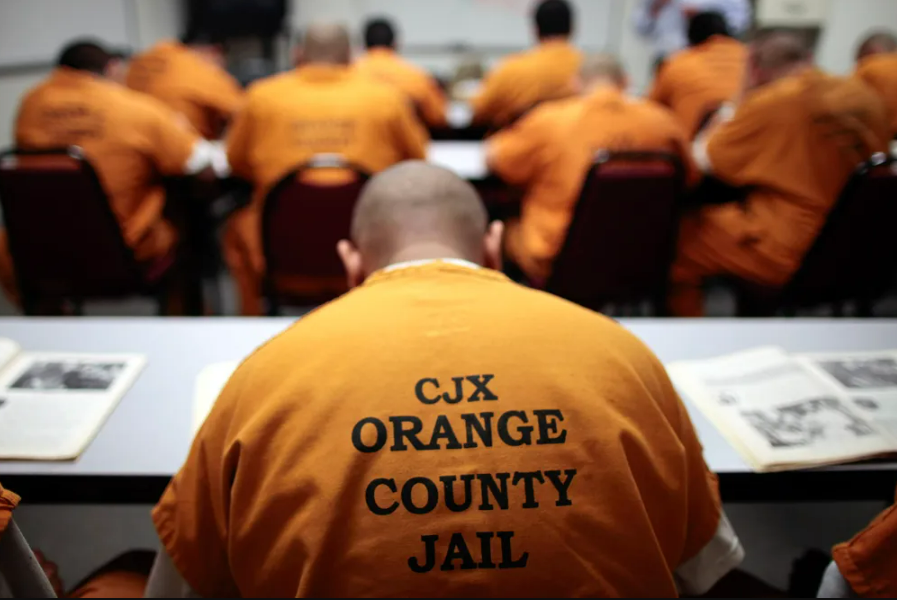
University of California – Berkeley Law published a short report on Proposition 36, “Proposition 36: What Voters Ordered, What They Got, and Where do We Go from Here.” Approved by California voters in November 2024, Prop 36, The Homelessness, Drug Addiction, and Theft Reduction Act, amended state law to allow felony charges for possessing certain hard drugs, and for petty theft, if the offender has two or more prior convictions. It went into effect in late 2024, allowing for court-mandated treatment for drug offenders or increased prison/jail time.
In October 2025, the Judicial Council, the administrative and policymaking body of the California courts, released a report “Preliminary Proposition 36 Court Data,” indicating that in the first six months since Prop 36 was passed and implemented, of the roughly 9,000 people who were charged with a treatment-mandated felony, nearly 15%, or 1,290 people, elected treatment.
As of October 2025, of the 771 people placed into treatment, 25 completed it.
The treatment infrastructure was never funded, leaving counties to improvise with nonexistent resources. The measure did not include dedicated funding when voters passed it, which was one of the reasons why California Governor Gavin Newsom opposed the measure. Behavioral health experts have long sounded the alarm over the lack of behavioral health treatment and staffing across California, but proponents argued that Prop 36 would be the great “forcing function” for the state to scale up treatment.
Kate Chatfield, executive director of the California Public Defenders Association, said the data proves that Prop 36 “is a fail;” not because people are treatment resistant but because treatment is not available.
“There’s no indication that anything will change,” Chatfield said. “Meanwhile, proponents are spending precious county resources on prosecution and incarceration in local jails and saying, magically, some money will appear for treatment. Proponents are the ones preventing those resources from being spent on treatment.”
Key takeaways from the short report:
- The Treatment Promise Is Unfunded: Prop 36 mandated treatment programs but provided zero dedicated funding. Only 1% of LA County residential treatment facilities had open beds. Twenty-two counties have no residential treatment facilities at all, and ten lack adult drug courts entirely.
- Voters Disapprove: 53% of California voters disapprove of implementing Prop 36 without treatment funding—including 38% of Republicans and 45% of Trump approvers. Only 34% approve.
- Treatment Is the Priority: 59% of voters want drug treatment and rehabilitation funded to support Prop 36’s goals. Only 22% prioritize jails and prisons. This preference holds across party lines.
- Racial Disparities Are Stark: In Alameda County, 90% of petty theft charges under Prop 36 were filed against Black defendants in a county that is 10% Black. Statewide, 84% of those charged are people of color.
- No Consensus on a Fix: A plurality (25%) favors outright repeal, 22% would fully fund treatment, and 21% would leave it to counties. The coalition agrees on values but fractures on strategy.
You can read the short report “Proposition 36: What Voters Ordered, What They Got, and Where do We Go from Here” from UC Berkeley Law.