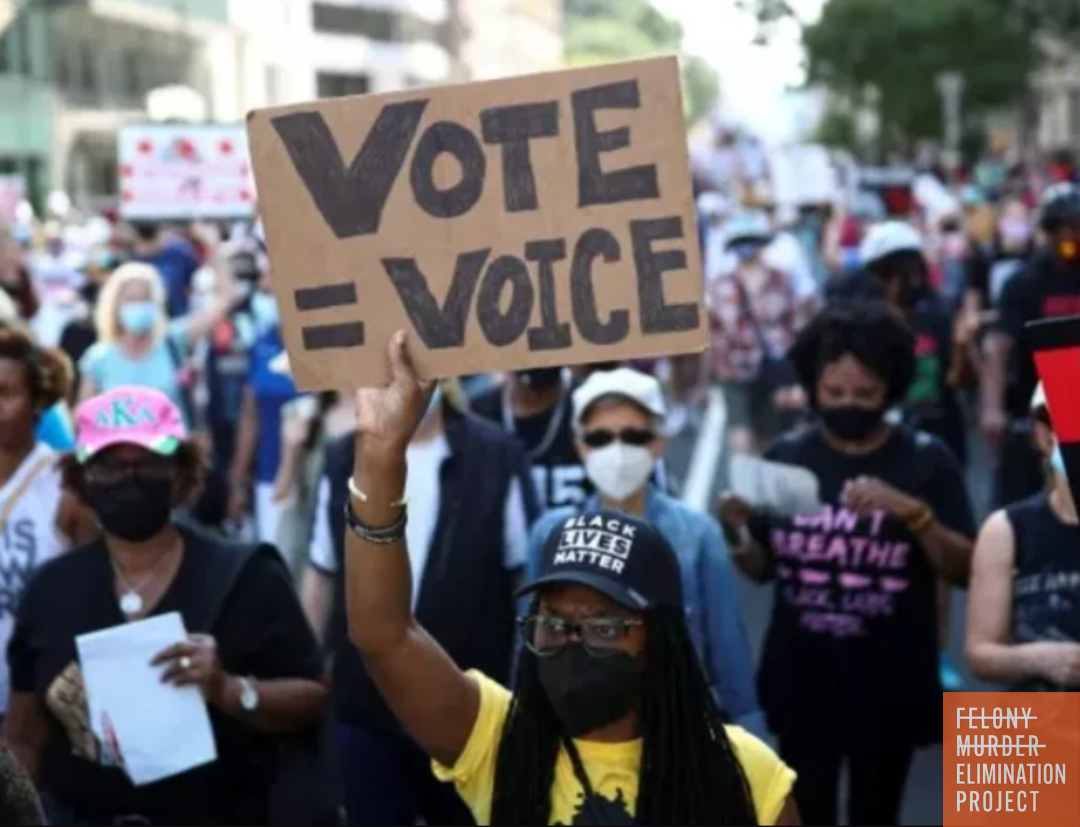
Laws in 48 U.S. states ban people with felony convictions from voting, resulting in nearly four million Americans denied voting rights. Representing 1.7% of the voting-age population, those four million Americans will be ineligible to vote due to felony disenfranchisement laws, many of which date back to the post-Reconstruction era. In this midterm election year, questions persist about the stability of democratic institutions, election fairness, and voter suppression in marginalized communities. The systematic exclusion of millions with felony convictions should be front and center in these debates.
When the Constitution was first written, it didn’t guarantee anyone the right to vote. Instead, it gave states the power to set their own voting rules for state and federal elections. Initially, most states granted white adult male property owners the right to vote. After the Civil War, Congress wanted to stop states from blocking Black men from voting. It passed the Fifteenth Amendment, which banned racial discrimination in voting.
Over time, additional amendments expanded the right to vote:
- The Nineteenth Amendment (1920): Gave the right to vote to adult women citizens
- The Twenty-Fourth Amendment (1964): Protected the right to vote for all eligible citizens by banning poll taxes in federal elections
- The Twenty-Sixth Amendment (1971): Gave the right to vote to all citizens aged 18 and older
Even with these changes, the states retained the power to decide whether people with felony convictions could vote. The Supreme Court confirmed this in Richardson v. Ramirez (1974). It held that the states may deny voting rights to people with felony convictions. This is because the Fourteenth Amendment allows the states to restrict voting for “participation in rebellion or other crime,” making states’ voting restrictions for people with criminal convictions constitutional.
State legislatures determine their own voting laws. This includes whether a felony conviction is grounds for disenfranchisement. States have a long history of prohibiting felons from voting before reinstating their rights later.
In almost all U.S. jurisdictions, a felony conviction results in a loss of voting rights for a period of time. The exceptions are Maine, Vermont, and the District of Columbia. In these jurisdictions, people convicted of a felony never lose their voting rights. Incarcerated people serving time for a felony offense can still cast a legal ballot.
Of the remaining 48 jurisdictions, the path to restoring voting rights varies. Every state that strips voting rights for criminal convictions offers at least one potential pathway to restoration. This is true even for states that use terms such as permanent disenfranchisement or disqualification. Some states automatically restore a person’s voting rights as soon as they leave prison, even if they’re on parole or probation. Others require completion of the entire sentence or an individualized review before voting rights can be restored.
You can view an interactive state-by-state map to view criminal disenfranchisement laws across the United States at the Brennan Center for Justice website.