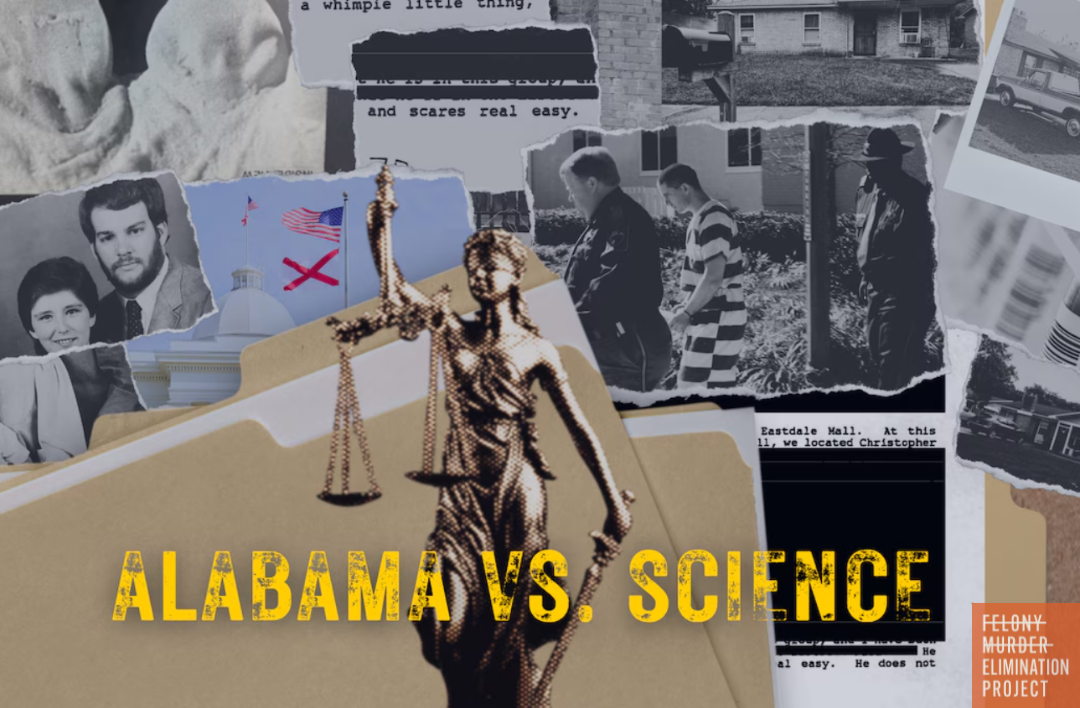
In 1985, Charles McCrory, an innocent man who has spent more than 40 years in an Alabama prison was wrongly convicted of the murder of his wife, Julie Bonds, in Andalusia, Alabama, based on now-discredited “bite-mark” science. Prosecutors told a jury he bit his wife during a bloody and brutal murder. But there was no other physical evidence. No matching DNA. No clear motive. No blood on his clothes. No confessions or eyewitnesses or jailhouse informants.
Two little marks, each a few millimeters long, sent McCrory to prison for the rest of his life.
McCrory only became a suspect because he and Bonds were separating. However, the separation was amicable, and the couple continued to share meals and raise their son Chad together, who was 2 at the time of the murder. McCrory volunteered to talk with detectives, consented to searches of himself, his car, and his home without hesitation. Despite the bloody crime scene, the search yielded no evidence tying him to the crime. No blood, no foreign hairs, and no wounds from a struggle.
Ms. Bonds’ family hired private attorneys, Frank Tipler and his son Harvey Tipler. The Tiplers decided an injury on Bonds’ body looked like a bite mark. They sent photos of this injury to a forensic dentist who matched McCrory’s teeth to the supposed bite mark, which became the key evidence used to convict McCrory. Today, “bite mark” evidence is widely understood to be unscientific evidence and its use has led to at least 40 known wrongful convictions.
- The only evidence that connected McCrory to the crime were alleged “bite marks” on Bonds’ body. Dr. Richard Souviron, who testified at trial that McCrory’s teeth “matched” the marks, has since recanted that testimony.
- McCrory has always maintained his innocence over the past 40 years. He had no previous history of violence or criminal record.
- No physical evidence connects McCrory to the crime. No other evidence at trial was presented that connected McCrory to killing his own wife; not an eyewitness, not a confession, not forensic evidence.
- Key evidence that could have exonerated McCrory was destroyed.
- At his evidentiary hearing in April 2021, the prosecution did not respond to any of the new evidence pointing to McCrory’s innocence.
In April 2021, the current district attorney offered McCrory a time-served plea deal, but he refused it. Moments before McCrory’s 2021 evidentiary hearing was set to take place, the district attorney offered him a “time served” plea deal. However, McCrory turned the offer down, refusing to admit guilt for something he didn’t do.
The United States Supreme Court declined to hear McCrory’s appeals. Despite the Supreme Court’s refusal to hear McCrory’s case, Justice Sonia Sotomayor offered a statement casting light on the broader issue reflected in the Court’s denial. Justice Sotomayor acknowledged the overwhelming number of exonerees later found innocent due to unreliable forensic testimony at the time of their trial, urging legislators to reform the system to provide incarcerated people with better avenues to challenge convictions based on outdated scientific methods.
Read more on McCrory’s fight for innocence here –>> What to Know About Charles McCrory — An Innocent Man Who’s Spent More Than 40 Years in an Alabama Prison