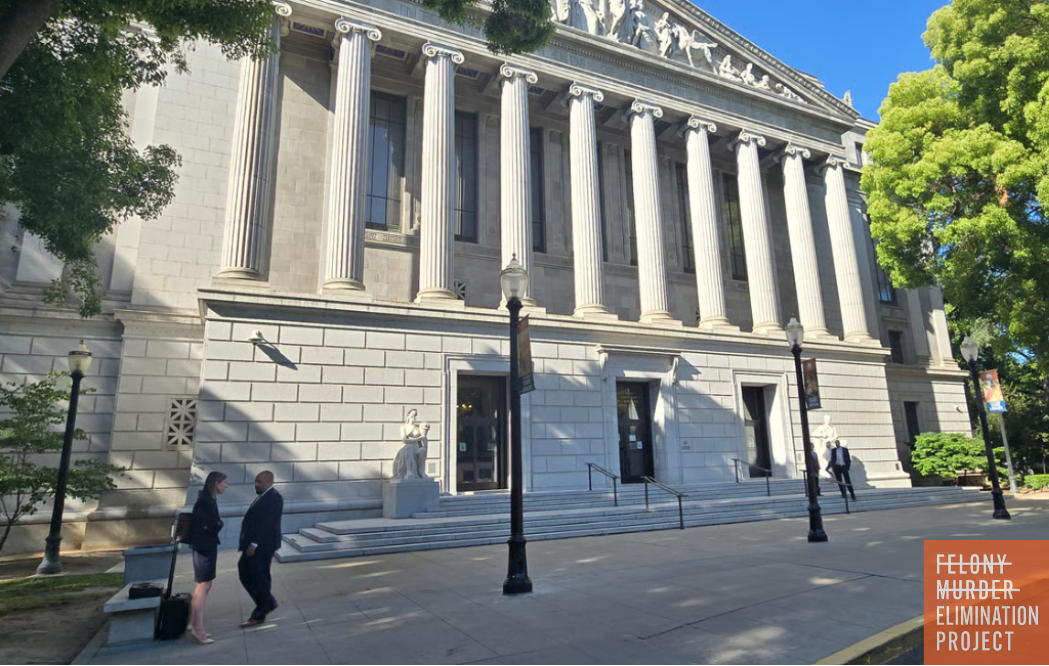
On Monday, the California Supreme Court on Monday reversed a lower court’s decision denying the reconsideration of resentencing for a man convicted of first-degree murder in 2013, a decision challenging the state’s felony murder doctrine. The ruling notes that under a law passed in 2018, Senate Bill 1437, a defendant must have aided or abetted the actual killer in the murder itself to be liable.
“We interpret the statutory language to mean just what it says: The phrase ‘aided … or assisted the actual killer in the commission of murder in the first degree’ requires proof the defendant aided or abetted the actual killer in the lethal act itself and not just the underlying felony,” Justice Joshua Groban wrote for the majority.
Previously, the state law defined first-degree murder as “all murder that is committed in the perpetration of, or attempt to perpetrate, specified felonies, including arson, rape, carjacking, robbery, burglary, mayhem and kidnapping.” However, SB 1437 narrowed the accomplice liability for felony murder to read that nonkillers can only be liable for murder if they either, “with the intent to kill, aided, abetted, counseled, commanded, induced, solicited, requested or assisted the actual killer in the commission of murder in the first degree,” or they were a “major participant in the underlying felony and acted with reckless indifference to human life.”
The law also allowed for those with murder convictions to file a petition to have their convictions vacated and to be resentenced.
Monday’s decision stems from an appeal for resentencing brought by Richard Morris, who was convicted of first-degree murder of James Stockwell, the owner of a topless bar, in 2013. The Superior Court denied Morris’ petition for resentencing, and a Fourth Appellate District panel affirmed the denial in March 2024.
In Monday’s opinion, Groban said the plain language of the statute weighs in favor of Morris’ argument that the law requires “a nonkiller to aid the actual killer in the lethal act. A person is not ‘the actual killer’ unless they directly cause a death. To aid ‘the actual killer’ is to aid the very act that defines that individual — the lethal act itself,” he wrote.
Groban continued: “The most natural reading, therefore, is that aiding ‘the actual killer’ with the commission of murder implies aiding with the lethal act rather than aiding the person (who ends up committing the lethal act) with some felonious act. In this way, the language of section 189, subdivision (e) is ‘plain and unambiguous.’”
The ruling in Morris’ favor now clears the path for resentencing.