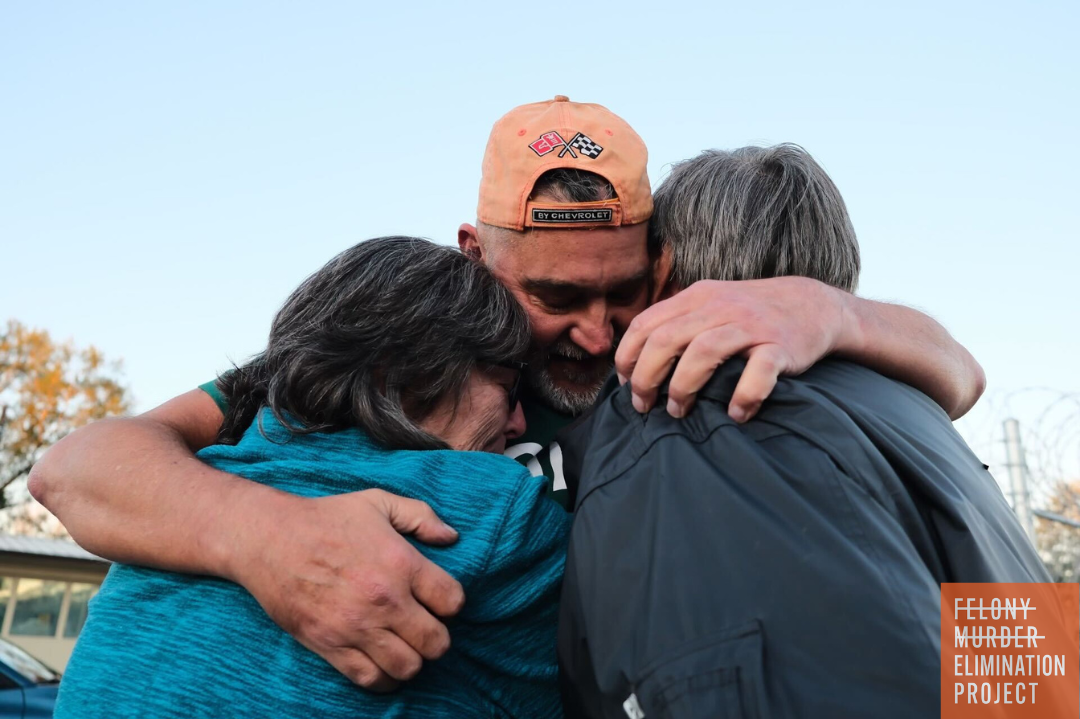
A wrongfully convicted man released after 27 years on Louisiana’s death row is now at home with his relatives in Central Louisiana.
Jimmie Duncan had originally been convicted of first-degree murder in 1998 after prosecutors accused him of raping and drowning the 23-month old daughter of his then-girlfriend. Fourth Judicial District Court Judge Alvin Sharp threw out that conviction in April after hearing expert testimony that the forensic evidence which put Duncan behind bars was “not scientifically defensible” and that the toddler’s death appeared to be the result of an “accidental drowning.” Similar faulty forensic bite mark analysis has led to dozens of other wrongful convictions or charges.
Prosecutors had relied on bite mark analysis and an autopsy conducted by two experts later linked to at least 10 wrongful convictions, according to Duncan’s legal team, which described the pair as discredited “charlatans.” A video recording of the examination shows Mississippi-based forensic dentist Michael West and pathologist Steven Hayne, who examined the victim’s body, shows West “forcibly pushing a mold of Mr. Duncan’s teeth into the child’s body — creating the bite marks” later used to convict him, a court-filing from Duncan’s legal team stated. A state-appointed expert, unaware of this method, testified during trial that the bite marks on the body matched Duncan’s.
“Bite mark evidence is junk science, and there is no more prejudicial type of junk science that exists than bite mark evidence,” M. Chris Fabricant, an Innocence Project lawyer representing Duncan, told the court during the bail hearing.
“The presumption is not great that he is guilty,” Sharp wrote in his order Friday granting Duncan bail, citing the new evidence presented at an evidentiary hearing last year and Duncan’s lack of prior criminal history.
Duncan’s attorneys said in a statement that Sharp’s ruling earlier this year provided “clear and convincing evidence showing that Mr. Duncan is factually innocent.” They added that Duncan’s release on bail “marks a significant step forward for Mr. Duncan’s complete exoneration.”
During Duncan’s bail hearing in Ouachita Parish, the mother of the girl he was accused of killing told the judge that she had become convinced of Duncan’s innocence. Instead, Allison Layton Statham believed her daughter, who she said had a history of seizures, had accidentally drowned in a bathtub. Her daughter “wasn’t killed,” Statham said according to court records. “Haley died because she was sick.”
Statham told the court that the lives of her family and Duncan “have been destroyed by the lie” she believed prosecutors and forensic experts had concocted.
Since 1973, more than 200 people on death row have been exonerated, including 12 people in Louisiana, according to the Death Penalty Information Center. In Louisiana, which has one of the highest wrongful conviction rates in the nation, the last death row exoneration came in 2016. Earlier this month, a man who served decades in prison before being exonerated won election to serve as the chief recordkeeper of New Orleans’ criminal court.
To read more about Jimmie Duncan’s exoneration, you can read “Jimmie “Chris” Duncan is Released After 27 Years on Louisiana’s Death Row” from the Innocence Project website.