We like to feature voices of the incarcerated on this page because they’re the voices that are vital for driving criminal justice reform, ensuring prison accountability, and upholding human dignity. They offer the firsthand expertise on system failures, such as solitary confinement and poor conditions, that is essential for developing effective, humane policies. Centering these voices combats harmful narratives, aids rehabilitation, and fosters successful reentry.
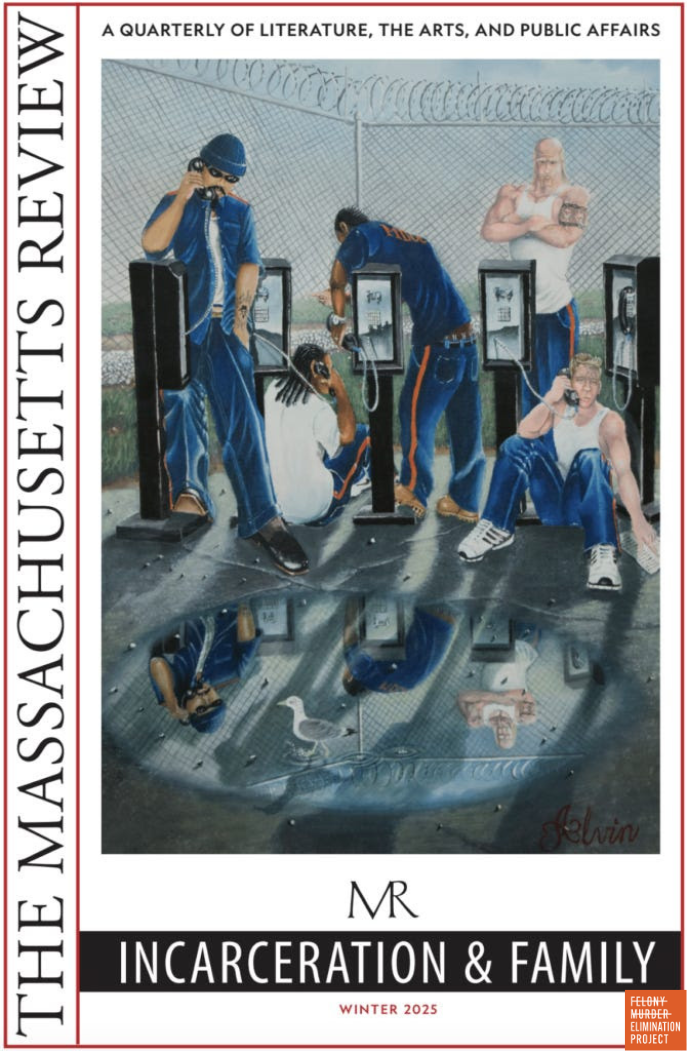
Alvin Smith is an incarcerated artist in Michigan. In December, his painting Undesirable Water (featured in the photo above), was chosen as the cover for The Massachusetts Review’s Winter 2025 issue, which focused on “Incarceration & Family.” His painting, Daddy’s Clothes, shown below, was also included in a glossy eight-page interior spread.
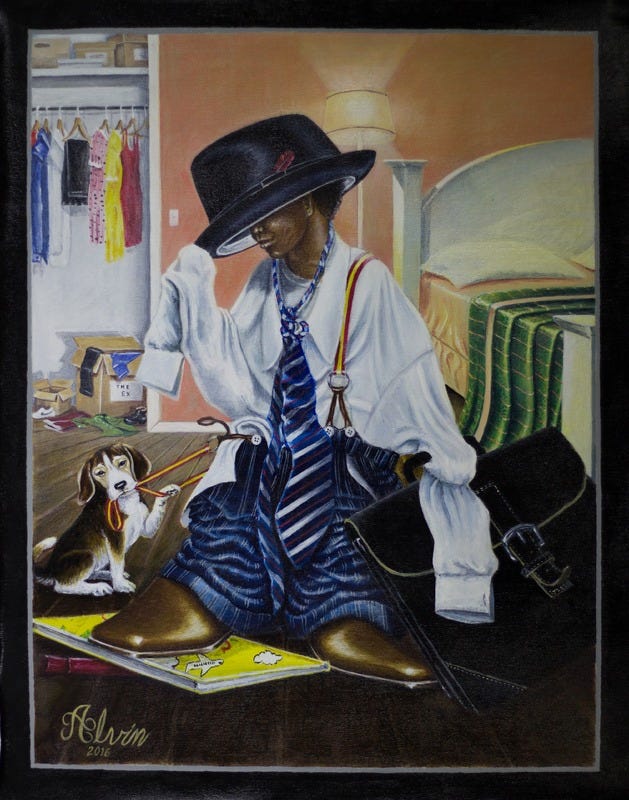
Smith reflecting on his practice of art:
I’ve spent years addressing the effects of the carceral system on us, the incarcerated, our friends and families… In spite of experiencing the full range of heavy emotions associated with exploring the stories I leave on canvas, I’m empowered by a sense of duty to tell them. When you gaze upon the piece Daddy’s Clothes, it’s cute to see a young boy mimicking his dad.
Does it change the way you feel about the piece to learn that perhaps his father is incarcerated and the youth is trying to become the man of the family in order to prevent its collapse? Art is the loudest part of my voice, and I am compelled to use it.
Read more about Alvin Smith’s artist statement and biography at Empowerment Avenue. Empowerment Avenue is a non-profit organization founded by Rahsaan “New York” Thomas and freelance writer Emily Nonko while Rahsaan was incarcerated at San Quentin State Prison in Marin County, California. Their mission is dedicated to normalizing the inclusion of incarcerated writers, artists, and filmmakers in mainstream media and art venues.