Proposition 36 Promised Treatment; It’s Delivering Incarceration, a new report from the Center on Juvenile and Criminal Justice, examines the early impacts of Prop 36 and underscores the need for reinvestment in community-based services.
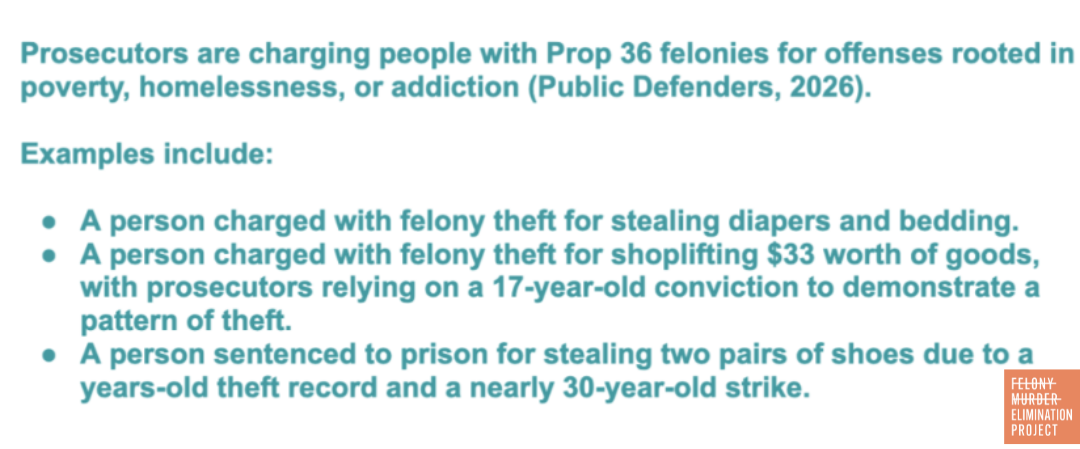
Approved by California voters in November 2024, Proposition 36 is a “tough-on-crime” initiative that created a “treatment-mandated felony” for individuals with two or more prior drug convictions. It allowed prosecutors to charge repeat, low-level drug and theft offenses ($950 or less) as felonies, offering treatment or up to three years in prison.
The data suggests Proposition 36 is failing. The measure has increased incarceration while failing to deliver on the promised “mass treatment” for drug offenders. Despite 9,000+ charged with the relevant crimes since Prop 36 was passed, only 25 people completed treatment in the first year. Additionally, despite the assurances made by Prop 36 proponents in the California legislature, the measure lacks dedicated funding, leaving counties struggling to implement its mandates.
From the report:
- Incarceration is climbing. Nearly 900 Californians have already been sent to state prison on Proposition 36 charges. Jail populations have grown by nearly 3,000 since Proposition 36’s passage, driven by a surge in unsentenced felony bookings. These 2025 data represent a reversal of yearslong declines in incarceration, and they are occurring amid all-time lows in California’s crime rate.
- Treatment offerings fall short of the need. Fewer than one in five people arrested on Proposition 36 drug charges have been ordered to treatment, and fewer than one in one hundred have completed a program. Long wait times for treatment beds, high costs, and the inherent limitations of court-mandated treatment, are contributing to this gap.
- Enforcement is arbitrary. Charging rates vary dramatically by county, with Orange County alone accounting for nearly 20% Proposition 36 charges and 40% of theft convictions, despite representing just 8% of the state’s population. Some prosecutors are charging far more Proposition 36 drug offenses, while others are opting for more theft offense charges. This inconsistency across counties exacerbates California’s longstanding problem of providing differing “justice by geography.”
- Communities of color bear the brunt. Black Californians are dramatically overrepresented in Proposition 36 charges. In Contra Costa County, for example, Black residents account for more than half of all Proposition 36 theft charges despite making up less than one-tenth of the population.
Supporters of Prop 36 proponents claim that funding shortfalls explain these outcomes. But California already allocates $2 billion annually in Public Safety Realignment (AB 109) funds meant to serve people with low-level offenses. These dollars flow primarily to probation and sheriff’s departments whose caseloads have fallen sharply over the past several decades. Counties have the resources to address the demand for treatment beds created by Proposition 36. What they lack is a commitment to reinvesting them.
You can read the report “Prop 36 Promised Treatment. It’s Delivering Incarceration” from the Center on Juvenile and Criminal Justice, a nonprofit nonpartisan organization whose mission is to reduce society’s reliance on incarceration as a solution to social problems.
You can also read “California Arrests Thousands on Minor Drug Charges, But Few Get Treatment,” which references this report, in The Guardian.