
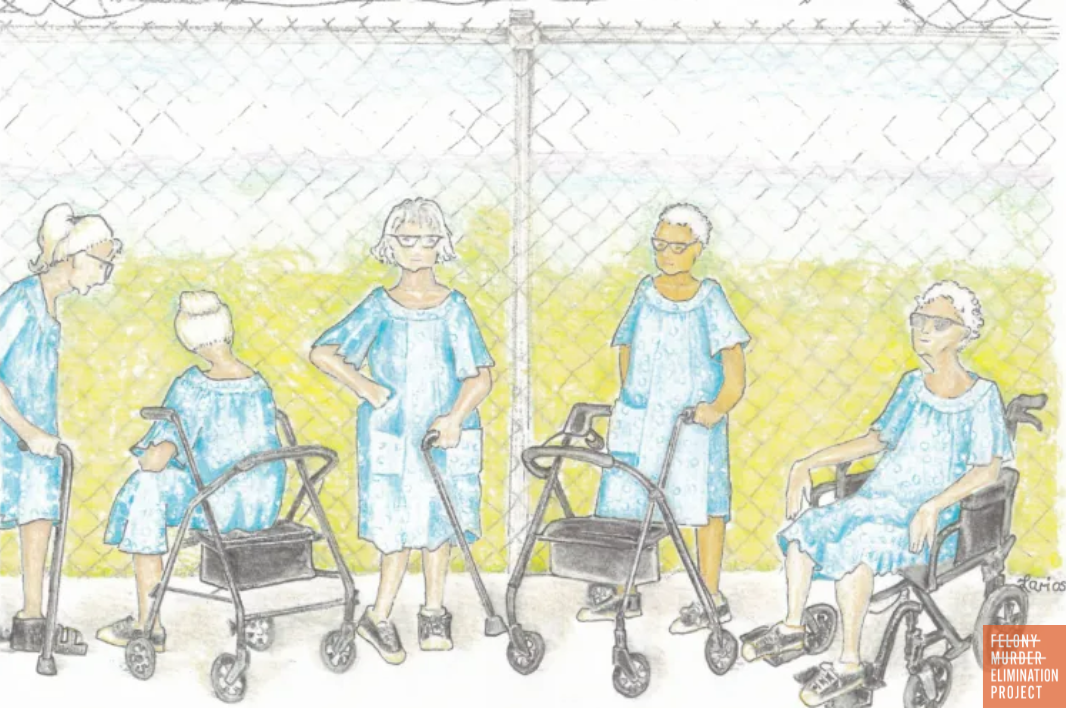
The California Coalition for Women Prisoners (CCWP) and the Policy Advocacy Clinic (PAC) at the University of California, Berkeley, School of Law released a report today detailing the urgent need to release elders from California women’s prisons. The report, “No Time to Wait: A Case for Releasing Elders from California’s Women’s Prisons” documents that incarcerating elders in California women’s prisons is unjustified, costly, and inhumane. Releasing elders from its women’s prisons will help California address the crisis of its rapidly aging prison population.
California has two women’s prisons, which incarcerate approximately 3,600 people. After decades of tough-on-crime policies, the state’s prison population is graying. Roughly one in five people in women’s prisons are over the age of 50. Although data from the prison system shows that recidivism rates decline with age, the state spends up to $300 million each year incarcerating approximately 740 elders in women’s prisons.
“To see many of our elderly struggle to walk to the shower room, chow hall, self-help groups, or to church, saddens me,” said Stephanie Lazarus, an incarcerated advocate with CCWP. “It made me question why the California prison system continues to house elderly women in prison when they are no longer a threat to anyone but themselves.”
The report examines the dangerous conditions elders face in California women’s prisons, and why so many remain incarcerated despite the available mechanisms for release: commutations, compassionate release, resentencing, and elderly parole.
Key findings from the report:
- Elders can be safely released. Elders present little risk to public safety once they are released from prison—data from the California Department of Corrections and Rehabilitation (CDCR) indicates that fewer than five percent of people aged 60 and older go back to prison within three years of release. These rates are even lower for elders who have served lengthy sentences.
- Incarcerating elders is a costly and ineffective use of public funds. It costs two to three times more to incarcerate an elderly person compared to the general population. California could save $31 to $47 million per year by releasing everyone fifty years of age and older from its women’s prisons.
- Elders in women’s prisons face unique challenges that go unaddressed. The costs to their health are magnified by higher rates of pre-existing health conditions and extreme heat brought on by climate change. People incarcerated in women’s prisons experience high rates of trauma and intimate partner violence before incarceration. Inadequate, or in some cases abusive, health care in prison exacerbates conditions associated with aging, including symptoms of menopause.
- Existing options for elderly parole largely exclude and deny women over fifty. New analysis of data from the California Board of Parole Hearings showed that between 2013 and 2024, an average of just twelve people were granted elderly parole each year from the two women’s prisons combined.
“Some of the recent attention on elderly parole in California has unfortunately ignored the facts,” said Jane Dorotik, an organizer with the California Coalition for Women Prisoners. “Data shows that elders can be safely released, and California has the tools and imperative to do so. Continuing to keep them in prison, where they suffer significant harm is unconscionable.”
You can read the full report here —>>> No Time to Wait: A Case for Releasing Elders from California’s Women’s Prisons
Want to help us share the word and take action? Access the “NoTimetoWait” toolkit here —>>> #NoTimeToWait Toolkit