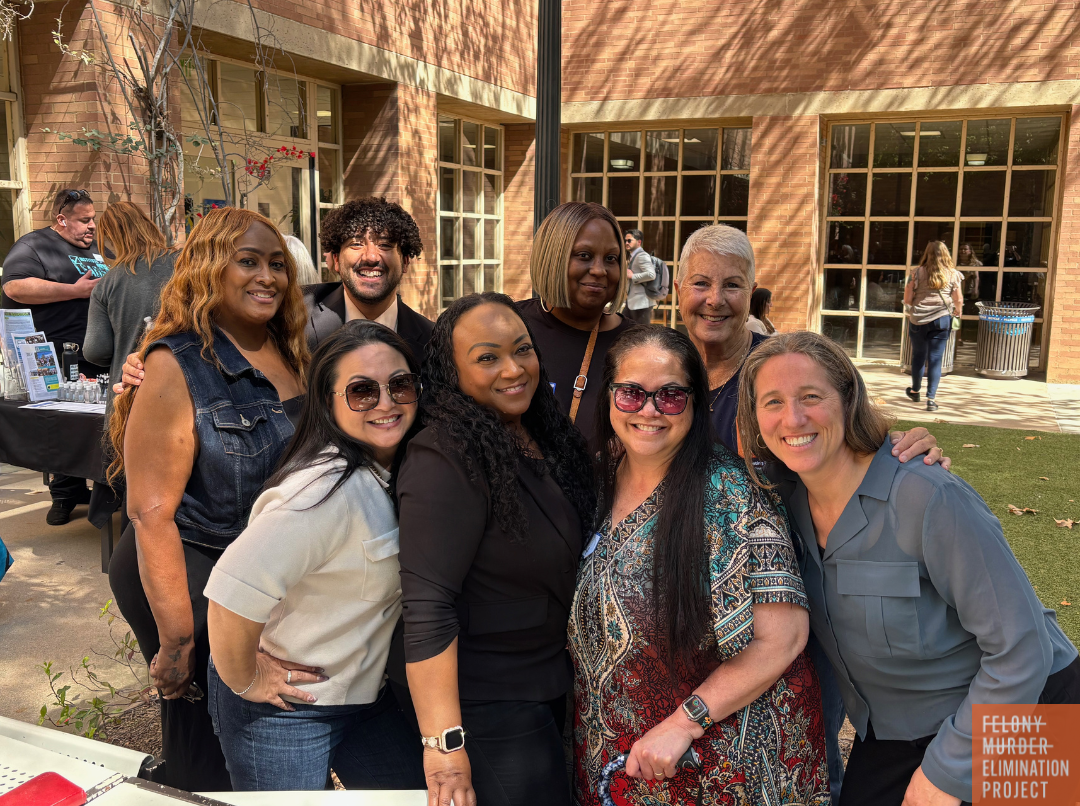
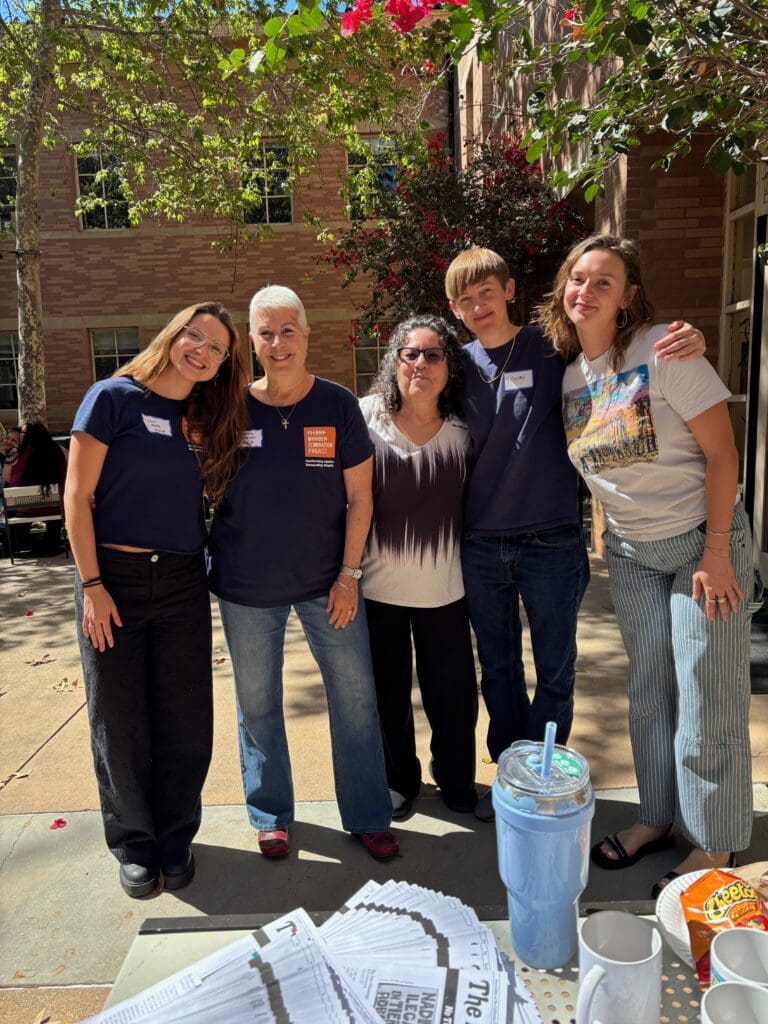
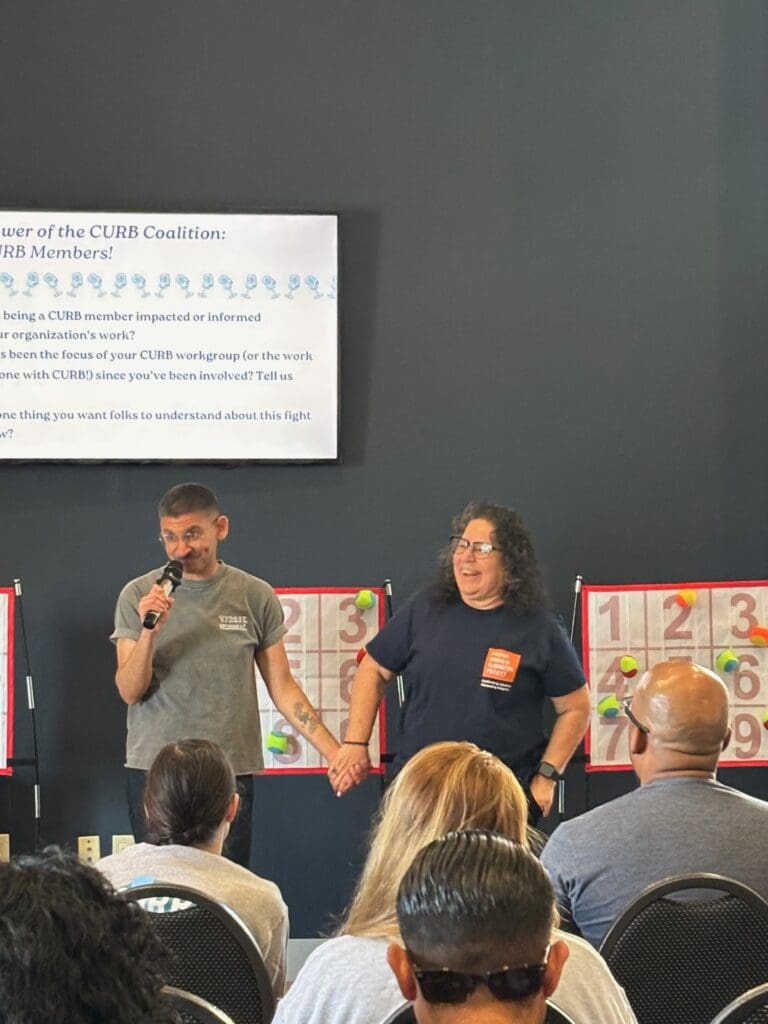
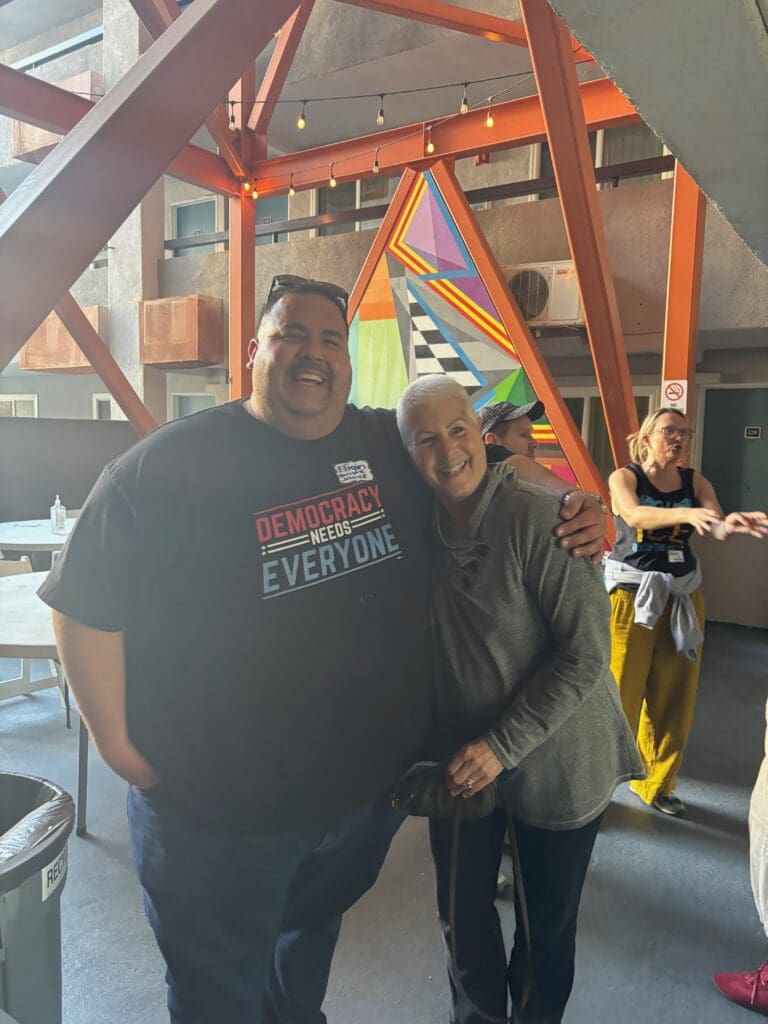
Felony Murder Elimination Project Founder Joanne Scheer (upper right) meets with criminal justice advocates this past weekend at UnCommon Law Lifers School at the University of California - Los Angeles
Last week, members of Felony Murder Elimination Project were able to meet and work in collaboration with partners Californians United for a Responsible Budget (CURB) and UnCommon Law toward our shared goals of advocacy and progressive criminal justice reform.
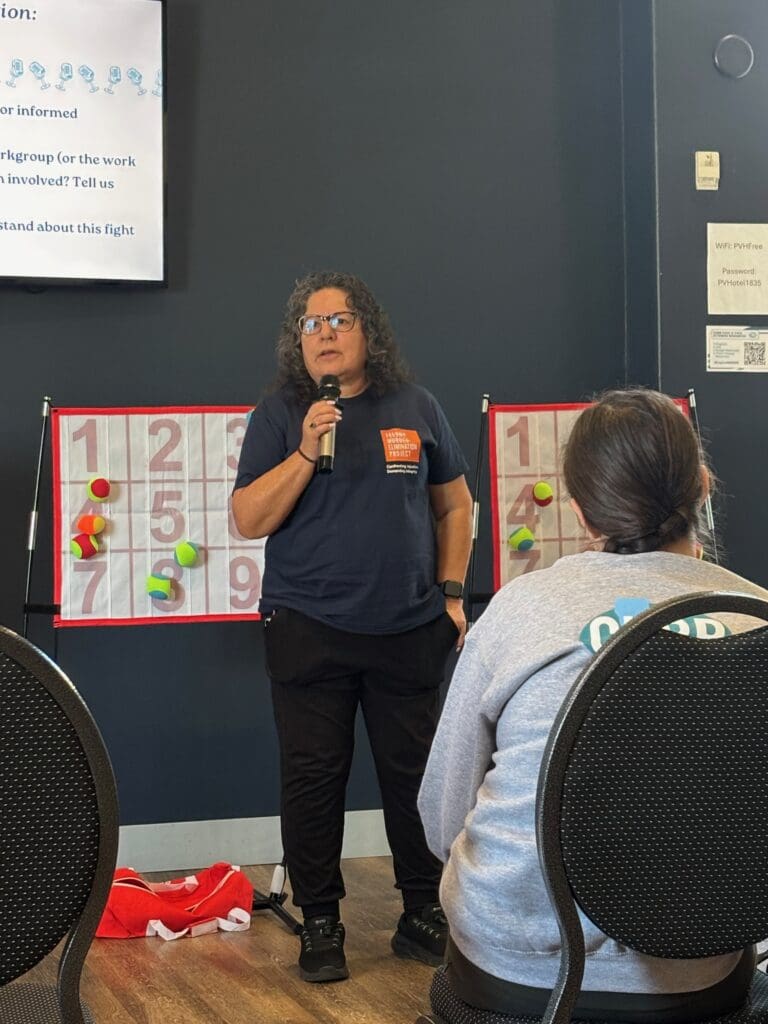
FMEP founder Joanne Scheer, FMEP board member Susan Bustamante, and FMEP Program Manager Giuli Mello attended Uncommon Law’s Lifer School at the University of California-Los Angeles School of Law on Saturday, March 14th. Our organization gained firsthand insight into the parole process from legal experts and people who have lived the parole experience themselves. Those lived experiences are crucial because it provides authentic, firsthand insight into complex issues that traditional research or policy so often misses. It bridges the gap between theory and reality, and offers practical knowledge that leads to better, more empathetic, and effective solutions, particularly in social work and public services. We are so grateful for the work UnCommon Law puts into making this valuable knowledge more accessible for all Californians.
Also this past week, Joanne, Susan and Giuli attended CURB’s Face-to-Face in San Diego for some deeply enriching and inspiring strategy conversations. Face-to-Face is an opportunity for CURB members to come together in-person to be in the community, discuss pressing issues impacting our work, connect the dots between linked struggles, reflect on our wins, and strategize for the year ahead. We are so thankful for CURB’s incredible leadership paving the way for effective decarceration work in California.
One of our partners spoke about Susan Bustamante’s contribution at the CURB meeting.
“Susan Bustamante describes life without parole as being stuck in a room with no door. She speaks from lived experience; 31 years spent in prison. LWOP means living year after year with no pathway, no release, and no chance to prove who you have become. But there may be hope in the possibility of new California parole board regulations that could give people who have served 25 years or more a chance to show redemption. Even the opening of a door crack means something. It means hope. Too many people remain in prison despite transforming their lives and doing the hard work to become worthy of a real chance at freedom.”
We all know the work we do is hard. We also know criminal justice advocacy is more effective and sustainable in partnership because it pools resources, increases credibility, and shares the heavy emotional and logistical workload. Collective efforts build stronger trust within communities and with policymakers, while diverse membership allows for better-rounded strategies to challenge systemic issues and sustain long-term reform efforts.
We have such deep gratitude for the hard work and resilience of the groups we work with and the individuals that make lasting, impactful change happen, and we are so thankful for both CURB and UnCommon Law for their work in this space.
To learn more about both organizations and the work they do, please visit their websites, linked below;
Californians United for a Responsible Budget (CURB) is a Black-led, statewide coalition of more than 80 grassroots organization, and their three point mission is to reduce the number of incarcerated people in California; reduce the number of prison and jails in California; and shift wasteful spending away from incarceration and toward healthy community investments.
UncommonLaw is an organization that supports people navigating California’s discretionary parole process through trauma-informed legal representation, mental health counseling, legislative and policy advocacy, and in-prison programming led by those who have been through the process themselves.
To provide the best experiences, we use technologies like cookies to store and/or access device information. Consenting to these technologies will allow us to process data such as browsing behavior or unique IDs on this site. Not consenting or withdrawing consent, may adversely affect certain features and functions.
Functional
Always active
The technical storage or access is strictly necessary for the legitimate purpose of enabling the use of a specific service explicitly requested by the subscriber or user, or for the sole purpose of carrying out the transmission of a communication over an electronic communications network.
Preferences
The technical storage or access is necessary for the legitimate purpose of storing preferences that are not requested by the subscriber or user.
Statistics
The technical storage or access that is used exclusively for statistical purposes.The technical storage or access that is used exclusively for anonymous statistical purposes. Without a subpoena, voluntary compliance on the part of your Internet Service Provider, or additional records from a third party, information stored or retrieved for this purpose alone cannot usually be used to identify you.
Marketing
The technical storage or access is required to create user profiles to send advertising, or to track the user on a website or across several websites for similar marketing purposes.