The following news story, “Becerra once pushed for the death penalty, but says he would extend a moratorium if elected governor,” appeared in the Los Angeles Times on September 8th. Xavier Becerra, the former Attorney General of California and current Democratic candidate to replace current Governor Gavin Newsom, says he would extend the moratorium Newsom enacted by executive order in 2019.
Excerpts from the story appear below.
Democrat Xavier Becerra defended the death penalty while serving as California’s attorney general, a punishment his office actively sought in the case of a gunman convicted of an Orange County mass shooting, but as the front-running candidate for governor he has vowed to block executions if elected in November.
Becerra said he will extend the blanket reprieve for all death row inmates that Gov. Gavin Newsom enacted by executive order in 2019, saying he supported “moving our state away from a costly, flawed system that disproportionately impacts Black and brown communities and too often gets it wrong.”
Those comments have reassured anti-death penalty advocates wary of Becerra, who has stated throughout his career that capital punishment should be an option for victims seeking justice. He reiterated that stance just a decade ago during his confirmation hearing for attorney general, though he also expressed concerns about the unjust application of the punishment.
Becerra’s challenger in the Nov. 3 election, former Fox News commentator Steve Hilton, opposes the death penalty but said he would rescind Newsom’s moratorium because it defies the will of voters.
Becerra has said he is concerned by how death sentences historically have been applied, including a highly disproportionate number of condemned inmates who are Black or Latino men and cases in which they later have been exonerated of crimes.
Though California has not performed an execution since 2006, prosecutors in some areas of the state continue to seek and win death sentences. As of early August, there were 565 condemned inmates in California prisons, according to the state Department of Corrections and Rehabilitation.
Newsom’s moratorium stops the state from carrying out those sentences.
Some death penalty opponents criticized Becerra for fighting to uphold the death sentence of Robert Lewis Jr., who was deemed by the California Supreme Court in 2018 to have an intellectual disability that made him ineligible for execution.
“I find that reprehensible,” said Mike Farrell, president of Death Penalty Focus, an advocacy group. A longtime anti-death penalty activist, Farrell is better-known for starring as B.J. Hunnicutt in the TV show “M*A*S*H.”
“It may not have been his idea, but he was part of that process,” he said of Becerra.
Others said Becerra cannot be blamed for doing his job. Former Vice President Kamala Harris faced the same dilemma when she served as state attorney general, as does Rob Bonta, who currently holds the office.
“The AG is in a different position because it’s just inherent in their role to defend convictions and sentences,” said Natasha Minsker of the California Anti-Death Penalty Coalition. “For example, Kamala Harris is very strongly personally opposed to the death penalty and still, while she was AG, the office defended hundreds of death sentences. Same with Rob Bonta. He’s very clearly personally against the death penalty, and his office continues to defend death sentences.”
Even if a governor rescinds the moratorium, resuming executions would be a long and complicated process because the state has no approved protocol or facilities to carry out death sentences.
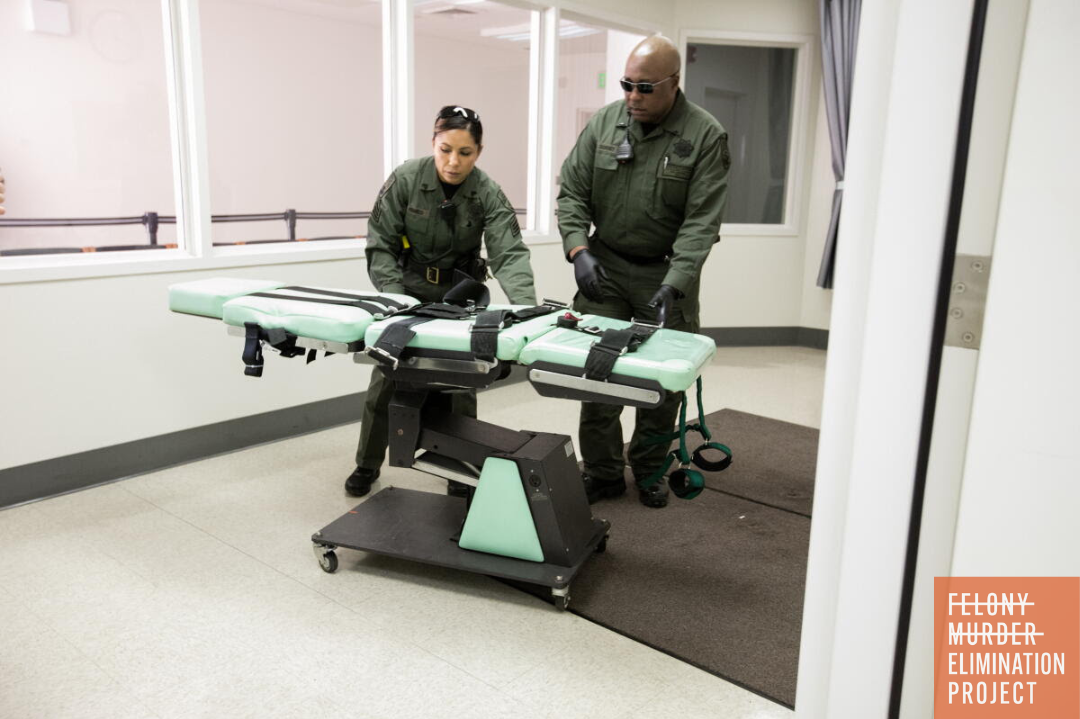
Newsom ordered the dismantling of San Quentin’s death row and execution chamber. Even before he took office, the state’s use of lethal injection drugs was part of a long-running and now-dormant legal battle. And a dwindling number of attorneys who specialize in death penalty cases meant 70% of condemned inmates did not have a lawyer at the end of last year, according to a state report.
California’s death penalty also faces a new legal challenge from groups arguing that capital punishment cases have been administered in a way that is racially discriminatory. In May, the California Supreme Court ordered the attorney general’s office to respond to the arguments and assigned the case to a superior court.
Attitudes about capital punishment have shifted over time. A 2025 Gallup poll showed 52% of Americans favor the death penalty for people convicted of murder, down from its peak of 80% in 1994.
In a 2023 survey by the Public Policy Institute of California, 62% of adults in the state said they “strongly favor” or “somewhat favor” the death penalty in murder cases. When asked which punishment they prefer for a first-degree murder case, 55% said life without parole and 43% chose the death penalty. More than three-quarters believe there “is some risk that an innocent person will be put to death.”
Despite the changing opinions, Minsker, of the California Anti-Death Penalty Coalition, said there’s little appetite for another repeal attempt because of how expensive ballot measure campaigns have become.
“I am personally one of the strongest proponents of ending the death penalty, and I am not sure I would spend $30 million on that right now, given all the other needs that California has,” said Minsker, a former attorney for the American Civil Liberties Union who ran the unsuccessful 2012 death penalty repeal measure.
You can read the full story, “Becerra once pushed for the death penalty, but says he would extend a moratorium if elected governor” on the Los Angeles Times website.