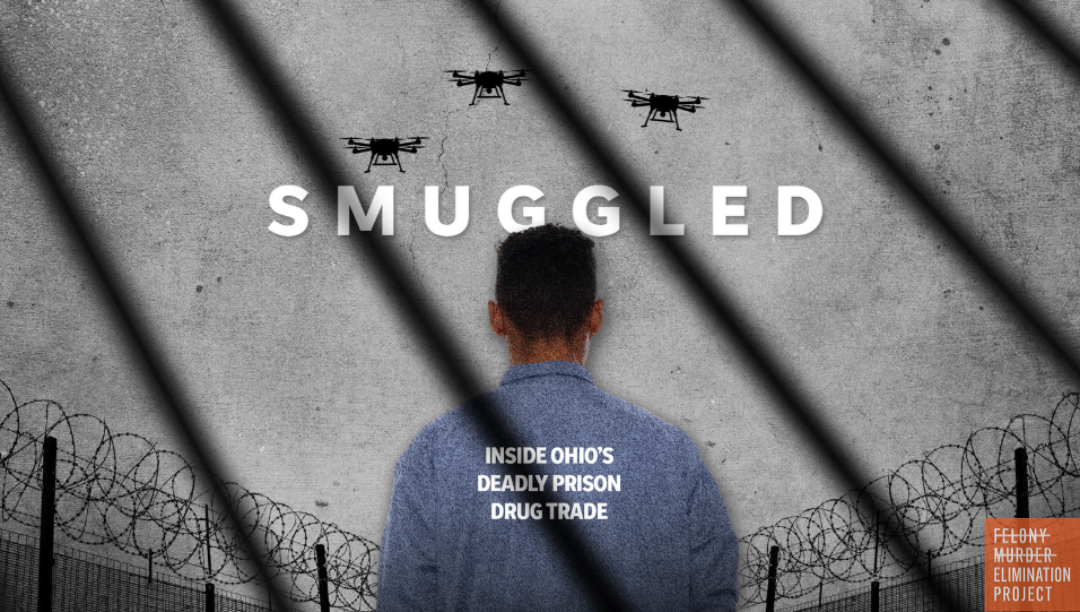
A year-long investigative project between The Marshall Project and The Columbus Dispatch examines the difficulties Ohio Corrections officials face in their efforts to stop prison drug trade. Tens of millions of tax dollars have been spent on tighter security, including taller perimeter fences, anti-drone technology and the electronic delivery of mail. Yet an unknown number of employees and contractors continue to sneak significant amounts of drugs through the front entrance with little consequence.
A database showed more than 56,000 drug seizures inside Ohio prisons since 2020. Reporters Doug Livingston of The Marshall Project – Cleveland, and Laura Bischoff of the USA Today Network’s Ohio bureau filed more than 50 public records requests, often waiting months for responses while tracking down 121 autopsy reports and interviewing more than 65 people. The journalists reviewed police reports, court documents, prison records, surveillance footage and witness statements of nearly 100 smuggling cases. They interviewed prison employees, incarcerated people and their families, prosecutors, coroners, crime lab experts, prison inspectors and drug smugglers.
The investigative team focused on these questions; Who is smuggling and how are they doing it? How much money is being made? How does the flood of drugs affect safety for workers and incarcerated people? And what is the state doing to stop drug smuggling?
The investigation, “Smuggled: Inside Ohio’s Deadly Prison Drug Trade,” found that drug-soaked paper is now the most commonly found drug in Ohio prisons leading to violence and deaths. Drugs are smuggled in by staff and visitors, tossed over fences and dropped in by drones.
State officials do not track employees and contractors suspected of smuggling. The reporters pieced that together by matching what was available from the state with criminal case files, patrol investigations and prison disciplinary reports.
“I feel like they think, ‘OK, he made a choice to get high. So that’s that,’ you know, instead of looking deeper into the root of the issues,” said Amber Hall, sister of Jayson Murphy, who died of an overdose at the Lebanon Correctional Institution in Warren County, Ohio, a state prison notorious for substance abuse and violence. “How are these things happening? Why are they happening more often? Why is this normal?”
You can visit “SMUGGLED: An investigation into how Ohio can’t stop state’s deadly prison drug trade” at the website for the Columbus Dispatch, which includes an exhaustive, five-part review of the investigation.
You can also read ‘Like The Walking Dead’: Smuggled Drugs Fuel Chaos Inside Ohio Prisons” at the Marshall Project’s website for their investigative report.