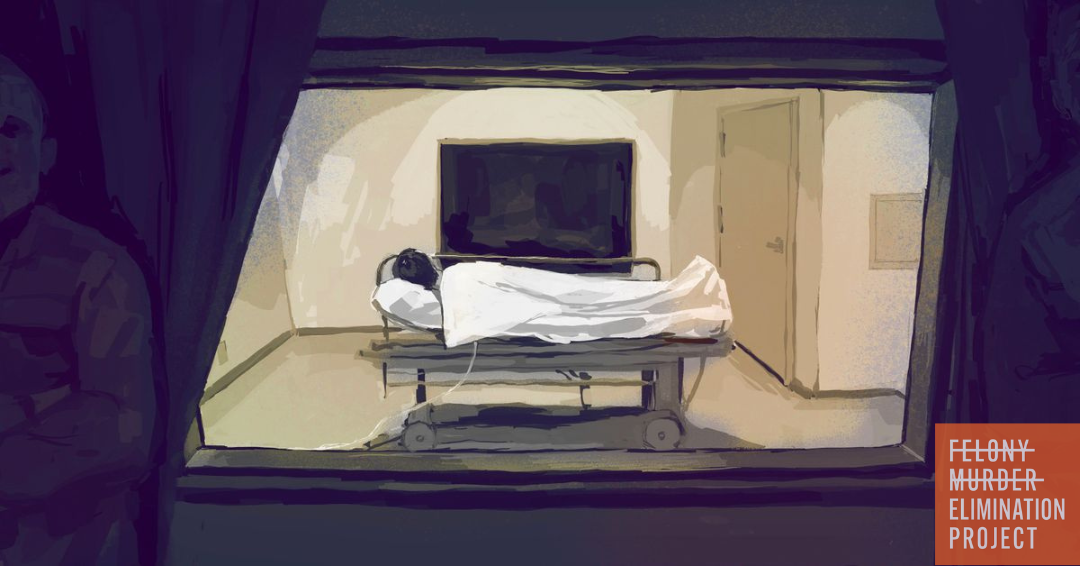
Though condemned occupants of death row in the United States generally have a right to have a spiritual advisor in the execution chamber, the State of Missouri denied spiritual advisors on two occasions. Yet, the state permitted eight other religious leaders to sit and pray within the death chamber during executions, an inconsistency that advocates said lacked compassion in the wake of the Supreme Court decision Ramirez v. Collier.
“We do not see how letting the spiritual advisor stand slightly closer, reach out his arm, and touch part of the prisoner’s body well away from the side of any IV line would meaningfully increase risk,” Chief Justice John Roberts wrote in the 8-1 majority opinion.
U.S. Supreme Court rulings alongside Ramirez, which affirm First Amendment rights and protect religious exercise under RLUIPA (Religious Land Use and Institutionalized Persons Act), allow for audible prayer and touch unless disruptive for those condemned facing their final moments before execution. RLUIPA requires states to show a “compelling governmental interest” and use the “least restrictive means” to burden a prisoner’s religious exercise, making it hard to deny spiritual advisors.
The practice of spiritual touch and praying aloud over people is adopted by various faiths and denominations in a wide variety of situations. Catholic priests who visit hospitals are trained to touch the patient (with permission) while praying aloud because it establishes a sacred bond and provides religious support. Indeed, many Catholics believe that last rites are not valid without touch. For that reason, during the federal government’s execution of Dustin Honken in 2020, Father Mark O’Keefe was permitted to administer last rites to Honken in the death chamber. He placed a host on Honken’s tongue, put holy oil on Honken’s head and hands, and delivered several prayers out loud. During other federal executions held in the 2000’s, spiritual advisors of various faiths were likewise permitted to pray out loud or, in the case of one Buddhist individual who was executed, chant throughout the entire proceeding.
A lack of clear policies enables the corrections department to deny spiritual advisers arbitrarily, said Megan Crane, co-director of the MacArthur Justice Center, a nonprofit civil rights organization. “We’re talking about constitutional rights in someone’s dying moments.”
Until the day arrives that the unconstitutional death penalty is abolished, the legal ability to execute people does not mean that states can trample other fundamental rights in the process. Every person is entitled to religious liberty, even those who will die at the hands of the government.
Especially those who will die at the hands of the government.
You can read more at “How Missouri Denied Condemned Men Spiritual Advisers at Their Deaths” at the Marshall Project website. The Marshall Project is a nonpartisan, nonprofit news organization that seeks to create and sustain a sense of national urgency about the U.S. criminal justice system.