KPBS, the National Public Radio/Public Broadcasting Station affiliate in San Diego, conducted an investigative report on how the the racial disparity in life without parole charges has widened in San Diego County in recent years. Statistical data indicates that Black murder defendants are disproportionately subjected to “special circumstance” filings compared to white defendants. Notably, this racial imbalance has increased during the tenure of the sitting District Attorney, Summer Stephan.
Special circumstances in criminal justice law are specific aggravating factors, particularly in murder cases, that indicate a blatant disregard for life, allowing for harsher penalties like life without parole or the death penalty. These circumstances must be proven beyond a reasonable doubt during the trial. Examples include murder for financial gain, multiple victims, or killing a peace officer.
In California, the special circumstances list was created in 1977 as a way to limit who could receive the death penalty and life without parole to the perceived “worst of the worst,” after the Supreme Court said those sentences were being given too randomly. Ballot measures have worked to expand this list over the past decades.
San Diego’s Office of the Public Defender hired a statistician to analyze years of murder cases from the District Attorney’s Office. Even though most murders are eligible for special circumstances, the analysis found that Black defendants are charged with a special circumstance at a rate nearly three times higher than white defendants. Not only is there a large racial gap in who receives charges that can lead to life without parole, after Summer Stephan became the district attorney in 2017, it grew significantly wider.
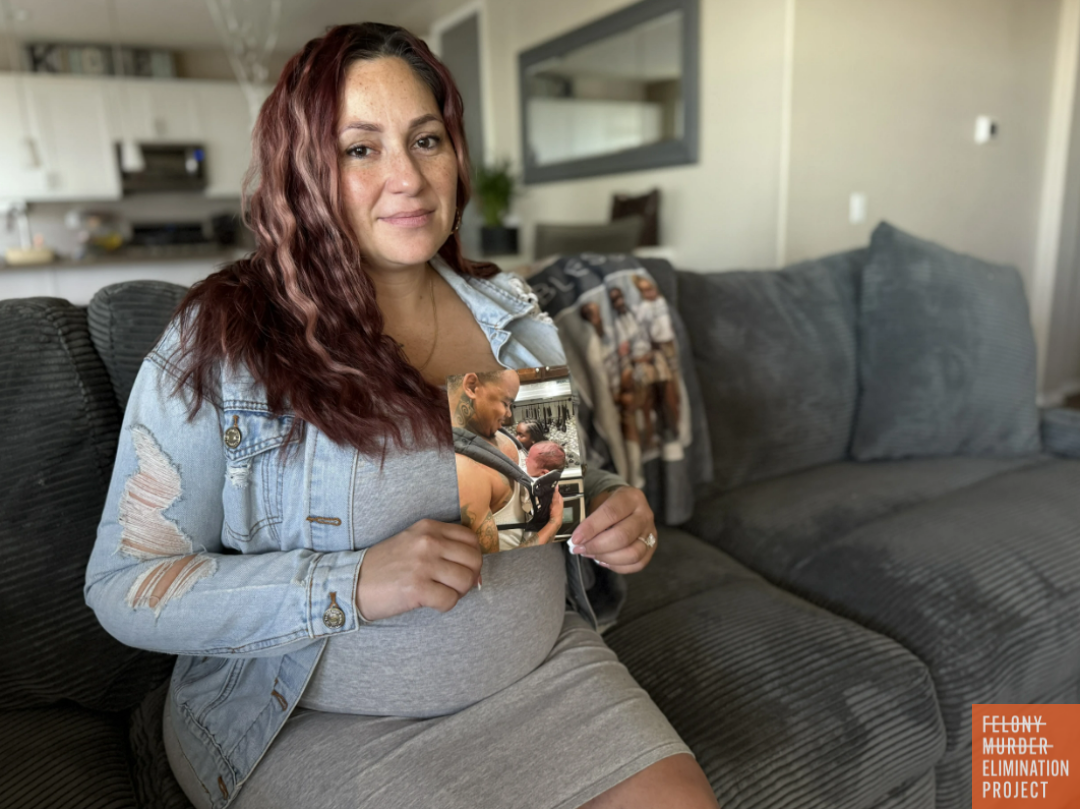
Featured in the report is Daniel Trautfield, formerly the Program Director with Felony Murder Elimination Project. Trautfield is now the director of the University of California, Los Angeles Special Circumstances Conviction Project. FMEP is partner of the Special Circumstances Conviction Project.
From the report:
“I thought that our system would only, you know, give them life without parole if the things that they had done were truly egregious,” Trautfield said.
About 5,000 people are serving life without parole in California, a number that far exceeds nearby states, he said.
When Trautfield started meeting them, they weren’t who he expected. They were often people using wheelchairs and walkers who had lived in the prison for decades. People he considered fully rehabilitated, and who were leading rehabilitative work in California prisons.
To him, they were the most deserving of their freedom, but least eligible to receive it. The U.S. is one of the only Western countries to sentence people to life without parole, he said.
According to the U.S. Department of Justice, it doesn’t deter crime. Pulling together data to see patterns in these sentences is challenging, Trautfield said.
Recently, his team received what he called a “windfall” of data from the San Diego County District Attorney’s Office — a spreadsheet of all cases with at least one first-degree murder charge since 1996.
He said under former San Diego District Attorney Bonnie Dumanis, Black people were about five times more likely than white people to face life without parole through the special circumstance of felony murder. Under the current district attorney, Summer Stephan, he said that rose to about 23 times more likely.
“That’s a huge increase,” Trautfield said. “And that increase doesn’t really, can’t really be explained by other types of changes in the county.”
You can read the full report, “In San Diego, the racial divide in charges that can lead to life without parole has grown” by Katie Hyson, Racial Justice and Social Equity Reporter for KBPS, at the KPBS website.