The following piece “I’m Serving A Life Sentence For A Murder I Didn’t Commit” appears in the Huffington Post, and is written by Devin A. Giordano, an incarcerated writer in New York State.
Excerpts from the piece appear below.
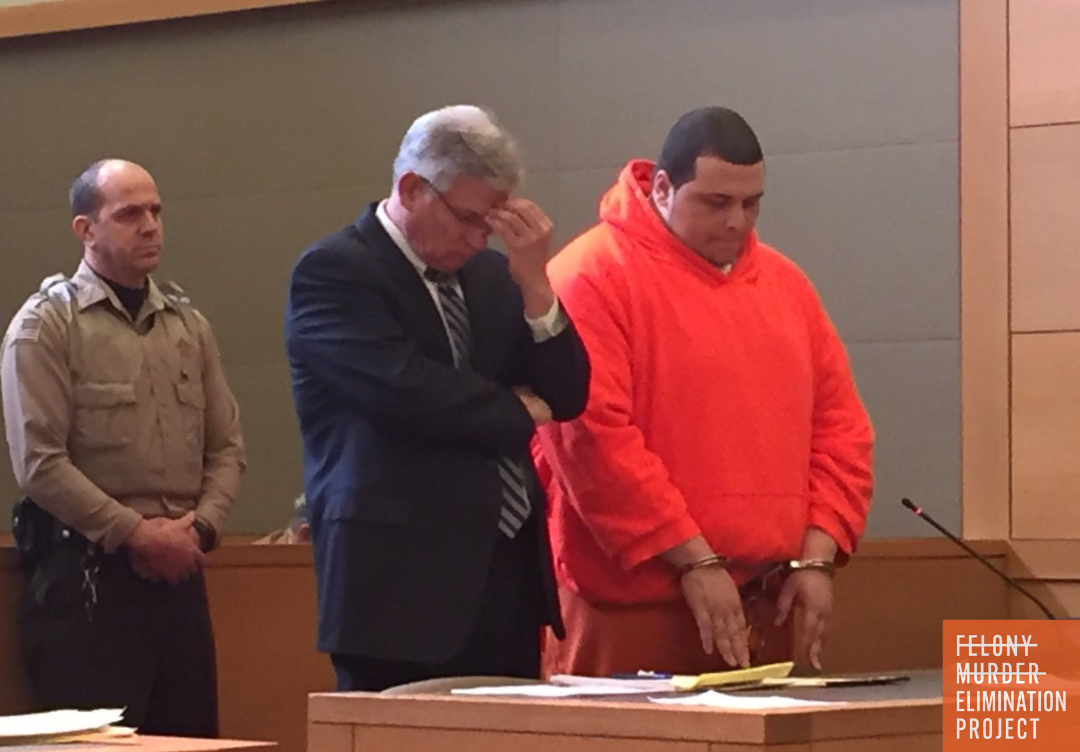
I was 19 when my then-girlfriend came out of a stranger’s house with blood on her shirt. Inside, an elderly woman lay dead. I hadn’t touched her, but the law said I was a murderer.
In a state of panic, my co-defendant poured rubbing alcohol and lit a fire — an impulsive attempt to cover what had already happened, a reflex of fear rather than reason. I stood outside, high on Xanax and weed, frozen in shock. I didn’t call for help. I didn’t run. I didn’t act.
After she was arrested, she gave both a signed statement and a recorded confession admitting what she had done, and admitting that I was outside when the homicide occurred. Still, the law treated us the same.
When the sentence came down — 20 years to life — I was stunned. My co-defendant received 19 years to life, even though she had confessed. Felony murder laws ignore both intent and individual action; they’re built on the belief that punishment should reach as far and as harshly as possible after a death. That isn’t justice — it’s desperation.
I’ve since learned that I’m far from the only one in this situation. In New York, at least 226 people have been sentenced under the felony murder rule, according to the Felony Murder Reporting Project. Across the country, more than 10,000 people have been punished under similar laws — people who, like me, may not have killed or intended to kill anyone. Each case is different, yet the same story is repeated: fear mistaken for intent, presence mistaken for murder.
Felony murder isn’t intentional murder. Intentional murder means you choose to kill. Felony murder means that if someone dies during a crime, everyone involved can be charged with murder, even if they never touched the victim or wanted anyone to die. It doesn’t matter whether you pulled a trigger or froze in fear; the law doesn’t care about why — it only cares that someone died.
That’s how I ended up with a life sentence. My fear and hesitation weren’t seen as weakness or panic. The law twisted them into malice. And New York continues to twist fear into murder today.
We all know intent matters. If two kids walk into a store and one of them steals, we don’t punish the other as if they stole too. But felony murder punishes presence as if it were action. That’s why teenagers across New York are still being sentenced to life for deaths they never caused.
At least 36 people convicted of felony murder in New York were younger than 18 at the time of their offense, and the median age for those sentenced is nearly six years younger than for all other crimes. Felony murder hits young people hardest because it removes the burden of proving intent. It allows courts to ignore what we already know about brain development — knowledge that should be a mitigating factor, not something erased. Teenagers act on impulse; their brains are still forming. Science confirms what every parent knows.
You can read the full piece, “I’m Serving A Life Sentence For A Murder I Didn’t Commit” at the Huffington Post website.
Devin A. Giordano is an incarcerated freelance writer and college student in the Bard Prison Initiative. His writing focuses on prison policies and lack thereof, unexplored aspects of felony murder, and mental health.