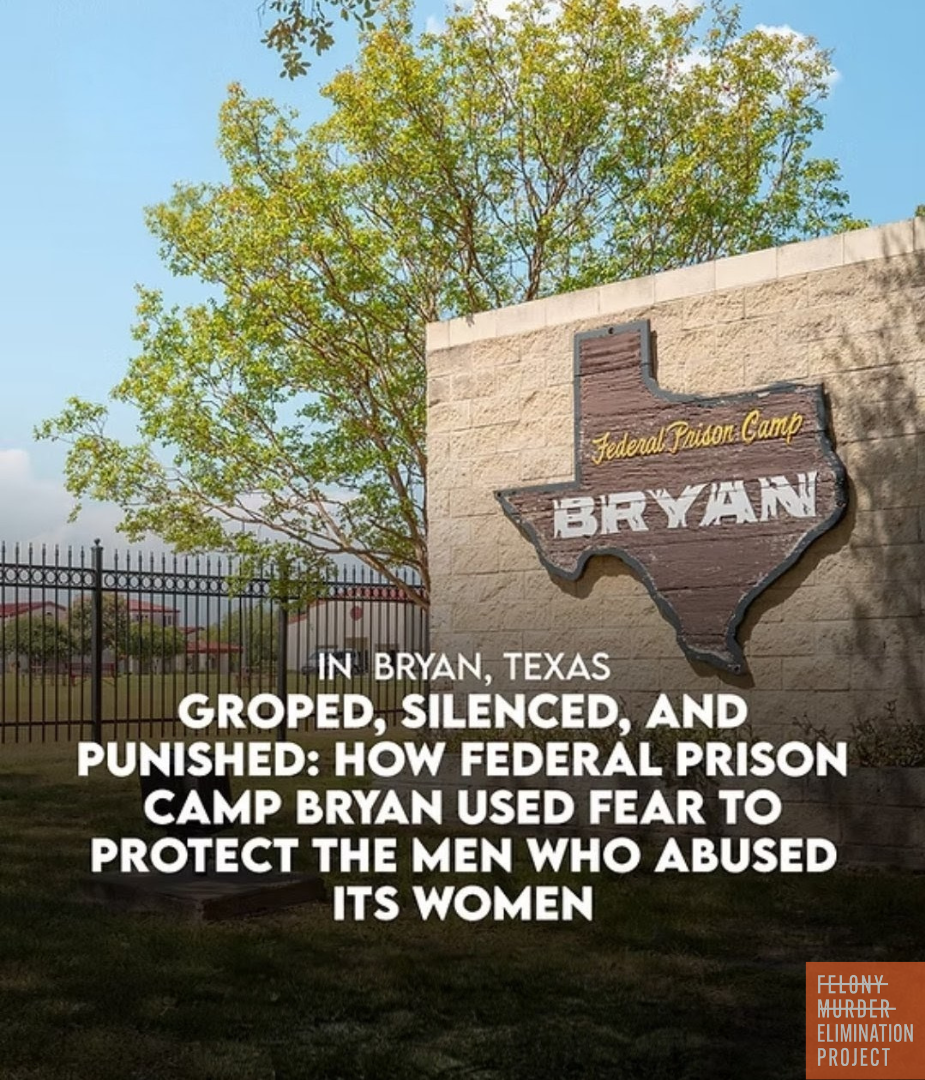
Six women who were incarcerated at Federal Prison Camp Bryan in Bryan, Texas since 2020 told NBC News that staff members pressured them into unwanted sex acts in deserted corners where there were no security cameras or witnesses. Two more women said staff members groped them or touched them inappropriately.
(TW: descriptions of sexual assault)
“Looking back, I wish I did a hundred things, you know, kick him, scream, cry, whatever,” said Darlene, 32, who alleges a prison chaplain sexually abused her in the chapel and in a closet after months of grooming her with compliments and hugs. Once, she said, he cornered her in a bathroom and reached into her underwear. She said she reported him to a correctional officer and a captain in early 2020 and also spoke to a Bureau of Prisons investigator but doesn’t know what happened to the report. Days after she reported the chaplain, Darlene said she was shipped to a more restrictive facility.
Darlene is one of several women incarcerated at Bryan, who, along with three former staff members, say they faced retribution or threats from prison officials after reporting misconduct against incarcerated women under the Prison Rape Elimination Act, a federal law meant to protect prisoners from abuse.
Others said they were too afraid to file complaints or didn’t expect that the employees would face consequences after seeing what happened when women had complained. “What made me upset was when they didn’t believe me; it’s frustrating and hurtful,” said Timeiki Hedspeth, who in 2020 reported a correctional officer who she says groped her twice while she was handcuffed in a hallway with no cameras.
“It doesn’t give someone the right to abuse their power and feel like we can be treated as less than just because we’re in prison,” said Hedspeth, who is completing her sentence for fraud charges on home confinement. “At the end of the day, we’re still human beings.”
Hedspeth never learned what happened to the report she filed. Her complaint was forwarded to bureau officials for review, documents show, but Hedspeth, 48, says she left Bryan in 2024 without knowing if the officer was disciplined. The officer said in a recent call that she did not remember such an incident and denied inappropriately touching anyone.
In all, the women accused five staff members of sexual misconduct. Two of them still work at Bryan. Three others are no longer employed by the Bureau of Prisons, including Timothy Martin, the chaplain who Darlene says abused her. The circumstances of Martin’s departure are unclear, and he did not respond to requests for comment. None of the accused employees appear to have been criminally charged.
NBC News reviewed sexual misconduct reports, court records, emails and memos to bureau officials, and spoke with staff members and other incarcerated people to corroborate the women’s accounts. Most of the eight women who shared their stories asked not to have their full names published because they were recounting sexual misconduct; four are still incarcerated or under supervision and said they fear retaliation. Some of the formerly incarcerated women and staff members interviewed by NBC News said that over the past six years, they had been contacted by investigators from the Bureau of Prisons, the Justice Department’s inspector general or the FBI. None of them knew what came of those probes.
According to the Bureau of Prisons’ conduct code, “there is never any such thing as consensual sex between employees and inmates.” Because of the power imbalance, any sex act between a prison staff member and an incarcerated person is a felony, punishable under federal law by up to 15 years in prison, and up to life in prison for sexual abuse where “force is used or threatened.” Any form of sexual misconduct, including harassment and inappropriate touching, is grounds for firing, the policy says.
Read more at “Groped, Silenced, and Punished: How Federal Prison Camp Bryan Used Fear to Protect the Men Who Abused Its Women” from Know Your Rights Camp, who aim to advance the liberation and well-being of Black and Brown communities through education, self-empowerment, mass-mobilization and the creation of new systems that elevate the next generation of change leaders.